“A laser focus on getting to treatments faster”: Remembering Dr Ian Davis OAM
As one of FightMND’s co-founders, Dr Ian Davis OAM was passionate about the need to disrupt Australia’s motor neurone disease (MND) research landscape. To lift it onto the international stage.
On Ian’s birthday, 2 June, the FightMND team sat with Dr Bec Sheean, General Manager of Programs and Research to reflect on his legacy. A legacy that continues to shape the organisation’s approach to research and its determination to move faster for people living with MND.
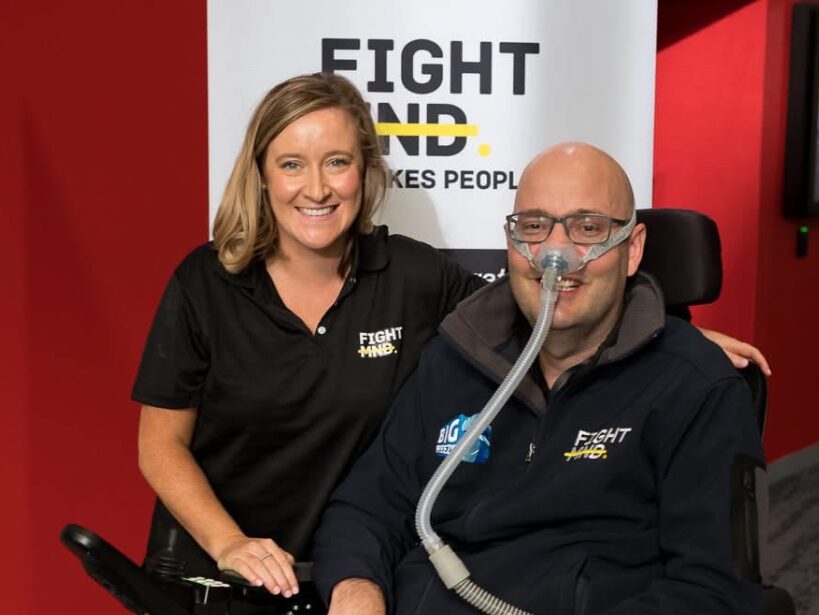
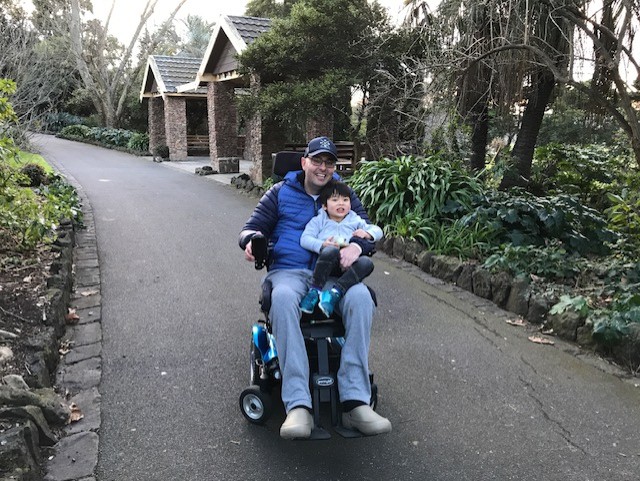
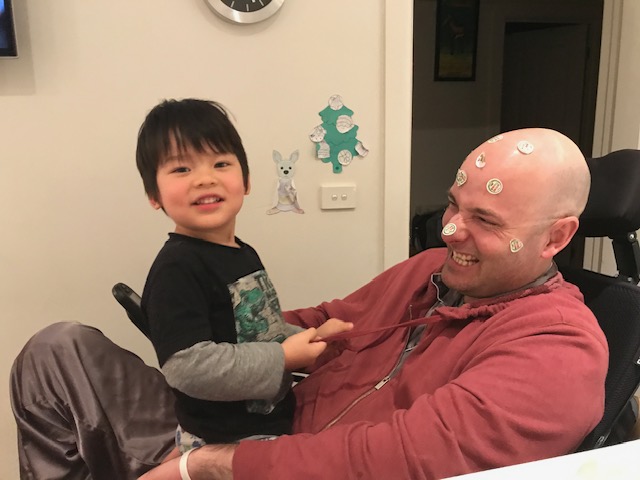
When FightMND was established in 2014, Ian was helping to shape its direction with the urgency of someone who understood, in the most personal way, what was at stake. Diagnosed with MND at the age of 33, he brought to the organisation both deep medical expertise as a clinician and researcher, and a lived experience of the disease that sharpened every decision he made.
Ian died in 2018, but his influence has never left the organisation he helped build. His thinking, his standards, and his insistence on urgency continue to underpin the way FightMND approaches research today.
Reflecting on those early years, Bec remembers a man who was, in her words, “laser focused” on one thing above all else: changing what was possible for people living with MND, and doing it faster.
A clinician who refused to accept “nothing available”
Ian’s background in haematology at Melbourne’s Peter MacCallum Cancer Centre shaped the way he approached MND research. Having worked in cancer care, he was used to offering patients options; clinical trials, new therapies and pathways forward when first-line treatments failed.
That experience made the reality of living with MND particularly confronting.
“At the time there were no clinical trials in Australia and there weren’t any new potential treatments in the pipeline either,” Bec explains. “Coming from cancer, he had always been able to give people different treatment options.”
She recalls Ian describing it as a drawer you could open again and again. “If something doesn’t work, open the drawer and try something new, or enrol in trials. There were other options to go to.”
For Ian, that “drawer” simply didn’t exist in MND.
That gap became the foundation of FightMND’s research strategy. Building a pipeline of therapies, starting in the lab and pushing them as quickly as possible toward clinical trials in Australian patients.
Building a pipeline, not just funding projects
From the outset, Ian insisted that FightMND’s research funding needed to be sharply focused. It wasn’t enough to support good ideas. The work had to directly contribute to treatments reaching people faster.
Bec explains that this meant a constant discipline around scope and impact.
“We were only funding the best research and the research aligned with that priority outcome,” she says. “Giving people access to potential treatments.”
He was equally firm on avoiding duplication. In a research landscape where competition often drives parallel efforts, Ian pushed strongly for collaboration instead.
“He was really, really against duplication,” Bec says. “He was a strong advocate about MND researchers moving away from silos. He believed that the MND research community needed to collaborate if we’re going to beat this disease.”
That philosophy shaped FightMND’s grant process from the beginning, including a rigorous international review system using leading MND experts. It also helped ensure funding was directed into genuine gaps rather than overlapping work already underway elsewhere.
Opening doors globally
Ian’s reputation extended far beyond Australia. Even when illness prevented him from travelling, his influence opened doors internationally.
Bec remembers attending global MND conferences on his behalf and meeting leaders from major pharmaceutical companies.
“These are really big pharmaceutical companies, very busy people,” she says. “But the reason they would have a meeting with me was because of Ian.”
His credibility, knowledge and passion meant organisations were willing to engage, not just with FightMND, but with the vision he had helped articulate; bringing clinical trials to Australia and accelerating global collaboration.
A demanding, restless, brilliant leader
Day to day, Ian was relentless.
“He just worked around the clock,” Bec recalls. “I don’t think he ever really slept.”
His ability to move between disciplines was extraordinary. One moment he would be analysing scientific literature, and the next he would be shaping communications, building partnerships, or refining the organisation’s strategy.
“He could go from reading a scientific paper… to understanding how to turn research into an emotive communication piece, to building our website,” she says.
But alongside his intensity was a clear philosophy. Efficiency mattered because every dollar should serve research.
Outside his work ethic, Ian, along with Neale and Pat, believed in the importance of putting the FUN into fundraising.
“We had so many laughs, so many good times. We worked hard but we also celebrated the little wins along the way,” reflected Bec.
A legacy that still drives FightMND forward
Beyond his scientific impact, Ian is remembered as generous, intelligent, and deeply committed to purpose. He helped establish FightMND in 2014 after retiring from medicine due to his illness, serving as Chair and leading its scientific direction.
He also played a key role in creating the inaugural Australasian MND Symposium in 2018, bringing together more than 400 researchers and clinicians with a shared goal of advancing global collaboration.
For Bec, his legacy is still present in how FightMND operates today: strategic funding, global partnerships, and an unrelenting focus on treatments.
And while Australia is now recognised as a hub for MND research, something Ian helped build, she believes he would still be pushing for more.
“Knowing Ian,” she says, “he would be proud of what we had achieved, but I’m sure he would have some constructive feedback! He would be saying, nice work now onto the next goal.”
Together we Play ON
Ian, together with Neale Daniher and Pat Cunningham, believed that everyone could be part of the fight against the Beast that is MND. Not just researchers, clinicians, or those living with MND, but an entire community willing to come together to help beat it.
Their legacy lives on through FightMND and the Australians who chose to continue the fight against the Beast. Together, we Play On, for Neale, for Ian and for everyone affected by MND. Show your support. Donate by grabbing a Digital Beanie.