Professor Anthony Akkari: Shaping a new era in MND research
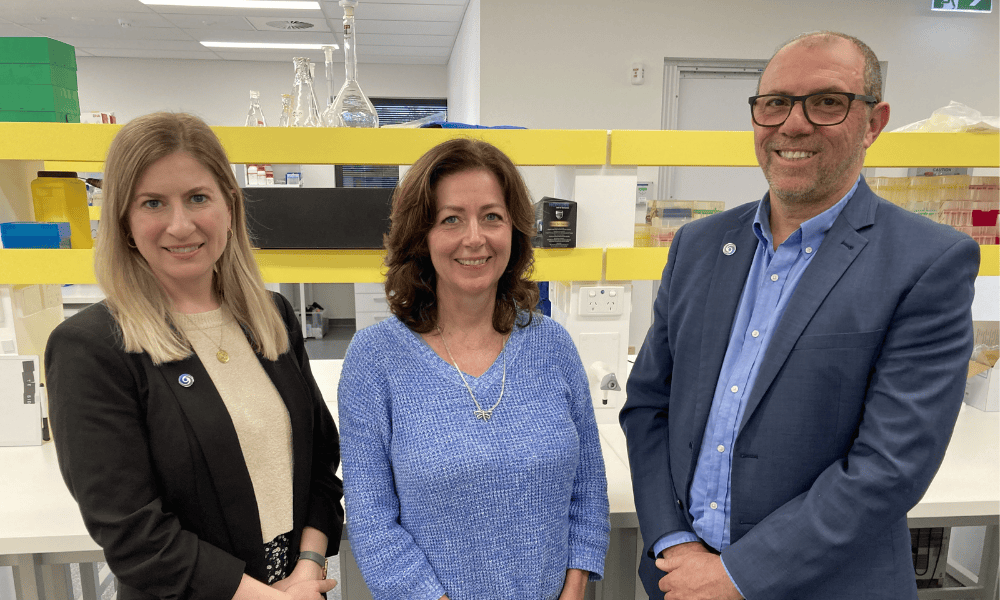
For more than 30 years, Professor Anthony Akkari has been researching diseases of muscle and nerve including motor neurone disease (MND) in Australia and the USA. From his early days as a young geneticist to leading one of the nation’s most innovative research teams at Perth’s Perron Institute, Anthony’s work has been shaped by scientific breakthroughs and deeply personal experiences. Today, he’s helping pioneer a new era of precision medicine that could transform the lives of people living with MND.
A career sparked by a breakthrough
Anthony’s journey began in the early 1990s in the lab of Professor Nigel Laing at the Australian Neuromuscular Research Institute, now known as the Perron Institute. At the time, very little was known about the genetic causes of MND. That changed when the team joined a global effort led by Professor Teepu Siddique to identify the first gene associated with the disease: SOD1.
“We studied a large family in WA with inherited MND,” Anthony recalls. “What struck me most was that both a mother and son carried the same SOD1 mutation. The son died in his 40s, but the mother lived into her 80s. It showed me how unpredictable this disease can be. Even within the same family.”
This early insight left a lasting mark on Anthony and sparked a deep interest in understanding the complex biology of MND. That interest would later become profoundly personal when Anthony’s own father was diagnosed with the disease.
“My dad was a strong, independent man. The kind of person who never asked for help,” Anthony says. “Watching him slowly lose his ability to speak, to move, to connect, was heartbreaking. It brought home in a very real way what MND takes from people. Not just their physical abilities, but their sense of self.”
His father’s diagnosis gave Anthony a new perspective, and a deeper sense of purpose. “It wasn’t just about research anymore. It was about doing everything I could to change the future for other families facing the same devastation.”
From “black box” to breakthroughs
When Anthony began his career, MND was widely seen as a uniformly fatal disease with few known causes and no effective treatments.
“It was a black box,” he says. “We were describing symptoms, not understanding the mechanisms. There were no genetic tests, no targeted therapies and very little hope.”
But over the last 30 years, that has changed dramatically. Researchers have now linked more than 50 genes to MND, including SOD1, TARDBP, FUS, and C9orf72. These discoveries have revealed that MND is not a single disease. Rather, it is a group of disorders with varied genetic and molecular roots.
“We now understand that MND involves things like RNA dysfunction, mitochondrial damage, protein misfolding, and chronic inflammation,” Anthony says. “That insight allows us to design therapies that go beyond symptom relief and start targeting the disease at its source.”
Leading the charge on gene therapies
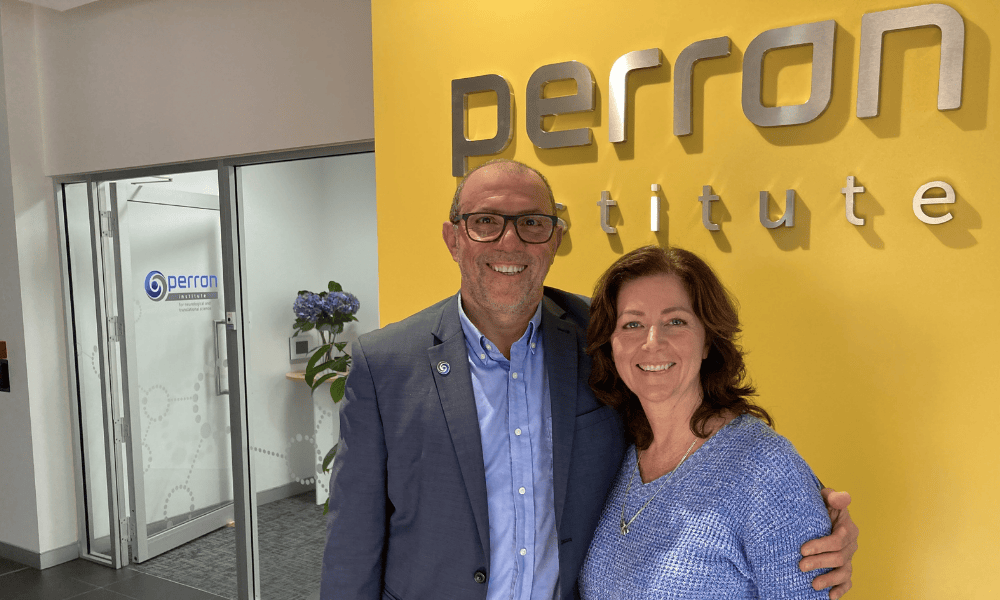
At the Perron Institute, Anthony co-leads a team with Dr Loren Flynn, focused on developing gene-targeting therapies for rare and inherited forms of MND. Their work centres around antisense oligonucleotides (ASOs), small molecules that can silence or fine-tune faulty genes.
Their most advanced project, BSB-0001, targets SOD1, the same gene that first sparked Anthony’s interest in MND. After strong results in the lab, the therapy is now being prepared for clinical trials.
They’re also developing ASOs that target TARDBP, which regulates the toxic TDP-43 protein found in nearly all MND cases. Another project is aimed at FUS, using a technique called allele-specific silencing to shut down only the defective gene while preserving the healthy copy.
“This is the promise of precision medicine,” Anthony explains. “Therapies tailored to the individual based on their own DNA and their unique disease biology.”
A vision for personalised medicine
Anthony envisions a future where every person with MND receives a personalised treatment plan. “When someone is diagnosed, we’ll take a DNA sample and a small skin biopsy,” he says. “We’ll use that to build a model of their disease in the lab, test a range of gene therapies, and find the one that’s most likely to work for them.”
Thanks to advances in stem cell science and high-throughput screening, this vision is closer than ever — but it will take close collaboration with regulators and continued investment to make it reality.
“Our goal is that no one with MND is left behind — no matter how rare their mutation or how complex their biology,” he says.
FightMND and the power of community
Anthony credits much of his team’s progress to the support of FightMND , which has provided crucial funding for high-risk, high-reward research.
“FightMND has given us the freedom to pursue ambitious projects and the resources to move them toward the clinic,” he says. “They’ve also helped build a true community, researchers, clinicians, patients, and families all working together.”
He’s especially grateful for their investment in early-career scientists, ensuring that the next generation continues to drive innovation in the field.
A message of urgency and hope
Anthony’s message is clear. The outlook for MND is changing.
“We don’t have a cure yet, but we now have therapies that can target the root causes of the disease. That’s a huge step forward,” he says. “The science is ready. The tools are here. Now we need to move fast. For every person living with MND, and every family like mine.”
For Anthony, this work is deeply personal. A tribute to his father, and to everyone who has faced the devastating impact of MND. “With continued support, collaboration, and compassion, I believe we can rewrite the future,” he says. “That belief, that hope, is what keeps us going.”
Live it forward and fuel the future of MND research
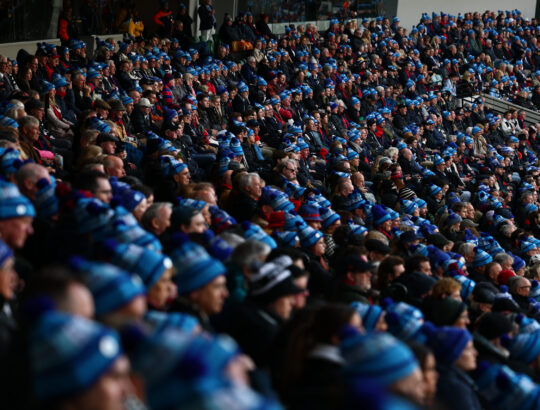
This Big Freeze, join the movement to defeat the Beast by supporting vital motor neurone disease (MND) research. Every Big Freeze 11 Beanie sold helps fund cutting-edge scientific projects focused on finding effective treatments and, ultimately, a cure for the Beast.
By donning your Beanie or pulling up your Socks, you’re helping to accelerate clinical trials, back world-class researchers and bring promising therapies from the lab bench to the bedside. From gene-targeting treatments to personalised medicine, the funds raised are making a real impact on the future of MND.
Grab your Beanie today from Coles, Bunnings, select Shell Reddy Express stores or online at fightmnd.org.au. Wear it proudly and share your efforts on social media. Tag @fightmnd and use #BigFreeze11, #LiveItForward, and #FightMND.
Together, we can live it forward for those fighting MND today and help create a future free from this devastating disease.