2025 MND Community Survey: What Australia’s MND community told us
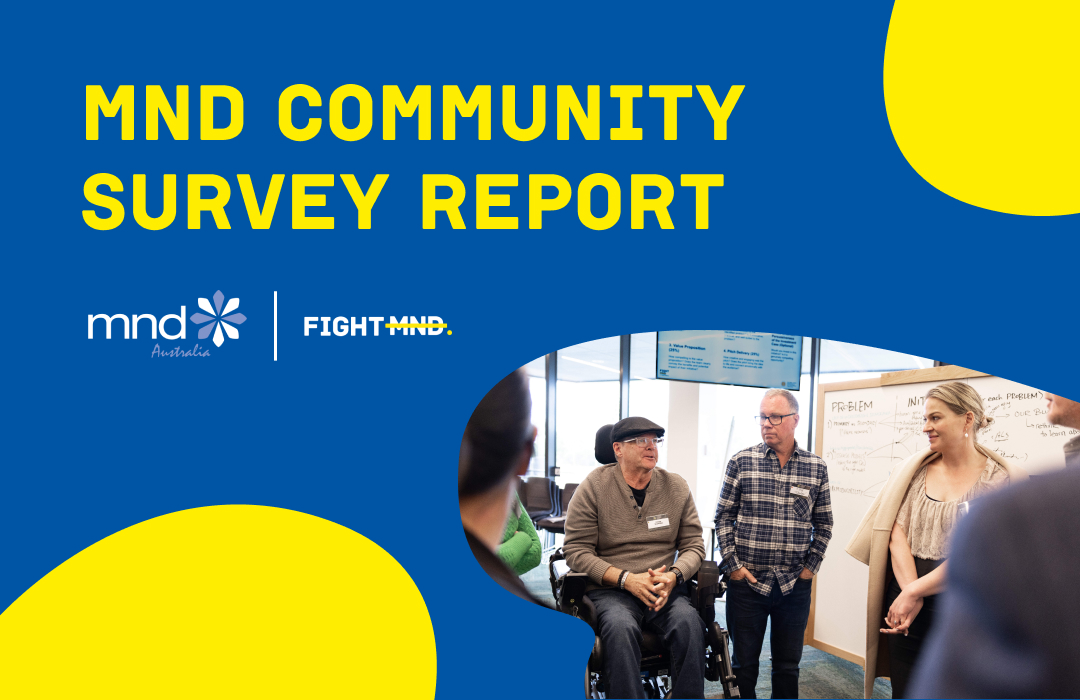
In August 2025, FightMND and MND Australia released the findings from the 2025 MND Community Survey. A national initiative designed to capture the lived experiences and priorities of Australians affected by motor neurone disease (MND).
Delivered by ACIL Allen, the survey was developed through a collaborative process involving people living with MND, current and former carers, asymptomatic gene carriers, clinicians and the state MND associations. This inclusive approach ensured the survey addressed the most relevant and pressing issues facing the community today.
With close to 500 responses collected nationwide, the survey provides a robust snapshot of the challenges, needs and aspirations of those impacted by MND. Findings from the survey will inform future care, research and advocacy efforts across Australia.
Living with MND: the power of support
Many respondents living with MND said their quality of life was moderate to good, especially if they received strong support from family and friends and had access to specialist care. Motor neurone disease clinics were highlighted as essential for providing multidisciplinary support. However, people in regional areas and those newly diagnosed often faced delays and barriers in accessing appropriate services.
Carers: The Backbone of Support
Carers reported the lowest overall quality of life among all groups. Many are providing full-time care with limited financial support and minimal access to respite services. Half lacked the necessary equipment or home modifications to support their loved ones effectively. Carers in regional areas faced additional challenges, including fewer knowledgeable professionals and reduced confidence in managing future care needs.
Gene Carriers: Seeking Connection and Clarity
Gene carriers expressed a sense of isolation and difficulty accessing timely genetic counselling. Cost and referral barriers were common and many reported stigma from healthcare providers. Improved peer support networks, regular neurologist screening and better access to clinical trials were identified as key needs.
Research and Advocacy: Community-Driven Priorities
The survey revealed strong interest in participating in research, particularly among gene carriers. However, barriers such as physical limitations, travel requirements and strict eligibility criteria often prevented involvement. Respondents called for more inclusive trials and better communication about research outcomes.
Top research priorities included:
- Identifying the cause of MND (75%)
- Developing clinical trials to slow disease progression (74%)
- Improving quality of life and earlier diagnosis
Advocacy priorities focused on equitable access to disability funding regardless of age, increased support for MND Clinics and reducing healthcare costs and wait times. Especially in regional areas.
Next steps
FightMND and MND Australia will use the findings from the survey to guide their future work. It is important to note the differences between the work of FightMND and MND Australia. For FightMND, the findings from the survey will be used to look at how our research investments and strategies can help address some of the areas identified by respondents. For MND Australia, findings from the survey will be used to inform care initiatives and advocacy strategies to support Australians affected by MND.
FightMND and MND Australia will work together to conduct this survey regularly to ensure our work addresses the needs of Australia’s MND community.
Download the report and learn more about the findings from the community survey today.
Watch Now: 2025 MND Community Survey Webinar Recording
Missed the 2025 MND Community Survey webinar? Catch up on the insights that are shaping the future of MND research and care.
FightMND and MND Australia have released the recording of the 2025 MND Community Survey webinar, where representatives from both organisations unpack the survey findings and discuss how they’re informing research investment, care initiatives, and support strategies.
Watch the recording now and hear directly from the voices driving change for people living with MND.