Global MND Roundtable continues to drive collaboration
Global MND Roundtable continues to drive collaboration

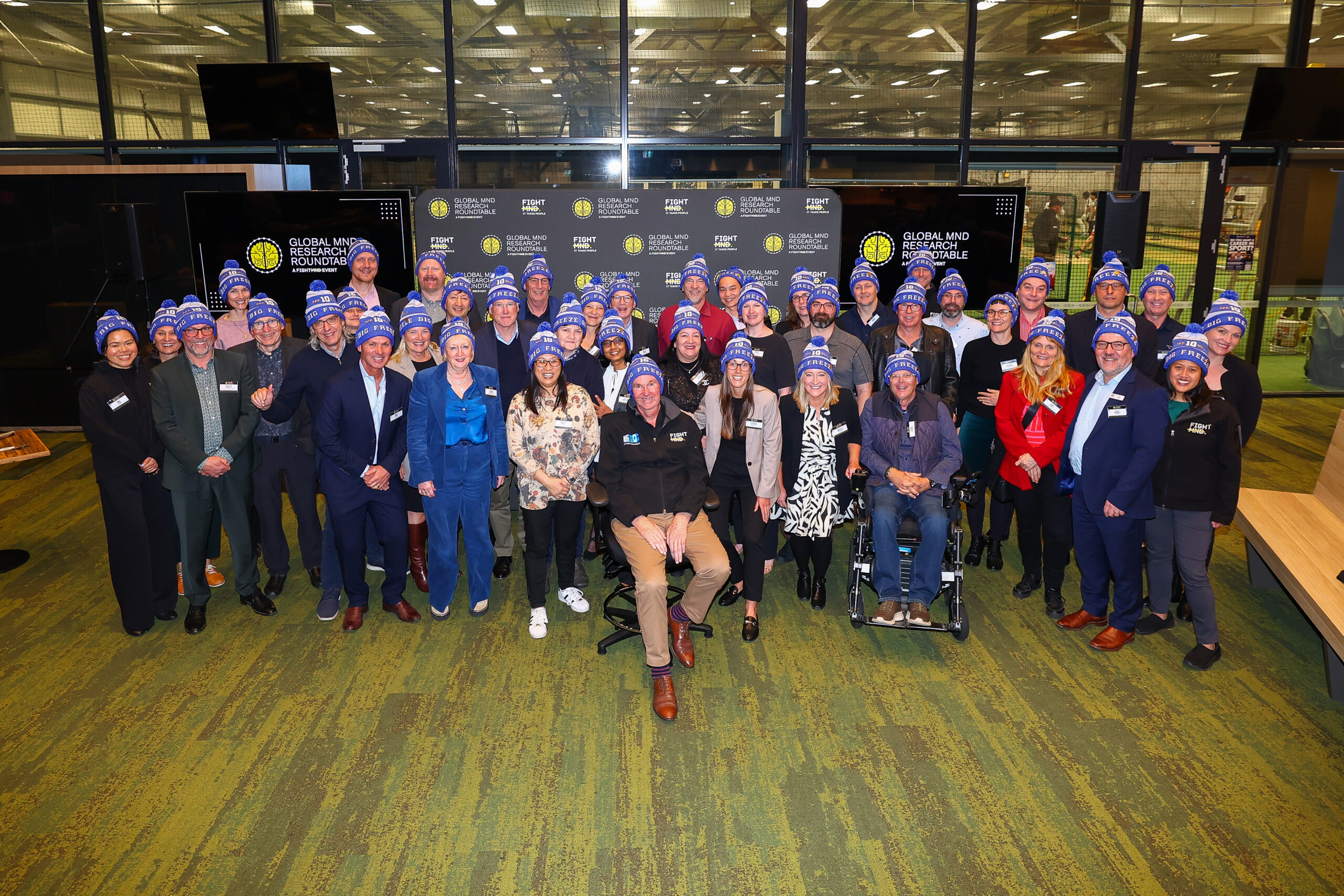
Inaugural Global MND Research Roundtable in Melbourne, Australia, August 2024

International collaboration and alignment is crucial for advancing MND research. In August 2024, we hosted our inaugural Global MND Research Roundtable in Melbourne, Australia. The Roundtable aimed to address key challenges in MND research, including: 

  • understanding the causes and key features of MND and identifying drug targets 
  • understanding the variations occurring in MND 
  • defining ways to accurately classify the type of MND affecting a person 
  • developing biomarkers that quickly diagnose MND. 
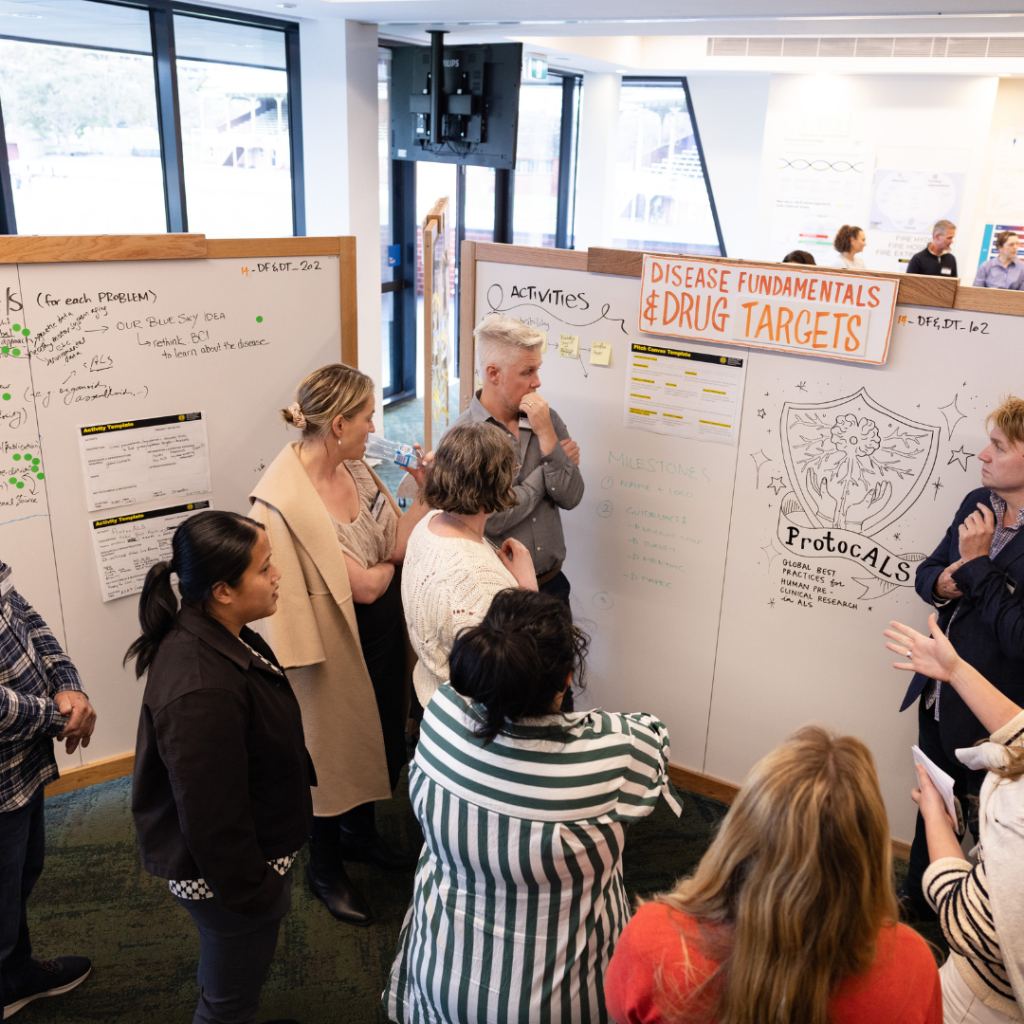
Global MND Roundtable Highlights, August 2024, Melbourne

The Roundtable was a unique forum, challenging attendees to think outside the box. The event united MND researchers, global collaborative leaders and strategic experts, and those with firsthand experience of MND. It fostered a rich diversity of views to address important themes and create actionable outcomes. 

Delegates worked together to gather information and understand issues, break down the problems and identify and prioritise actionable solutions. Working together, delegates gathered information to understand issues and break down the problems. Delegates developed actionable solutions for each of the four key challenges. These fell into two distinct categories: 

  • Harmonisation: encouraging everyone to work together to align research efforts and build consensus. To focus on improving resource and knowledge sharing to better coordinate our approach to new efforts and initiatives. 
  • Standardisation: providing guidance on how to work smarter and more efficiently across all research stages to achieve better results. 

FightMND is now working with experts in the field to address these areas. This includes working with MND Australia and ALS Canada to develop a Global MND Research Acceleration Strategy. This Strategy outlines seven ambitious and essential goals to accelerate MND research through global alignment and cooperation:  

  1. centralisation of big data 
  2. collaboration on biobanking 
  3. global approaches to studying presymptomatic / asymptomatic patients 
  4. recommendations of what is best practice in MND research 
  5. decentralised human MND model core 
  6. biomarker best practices for preclinical studies 
  7. master protocol for clinical trials. 

FightMND is working to ensure this work complements the current MND landscape. This aims to avoid duplication and achieve the best results. We hope that by working together we will overcome major challenges in MND research. In turn, this will help speed up the development of effective treatments for ALS/MND. 

Delegates reunite at the 35th International Symposium on ALS / MND 

On 8 December 2024, FightMND, in partnership with MND Australia and ALS Canada, hosted the Global MND Research Roundtable breakfast in Montreal during the 35th International Symposium on ALS/MND. The event brought together leading experts, ALS/MND organisations, industry professionals and those living with the disease.  

The event saw FightMND grow its international collaboration, with 25% of attendees being new key opinion leaders.  

Attendees had the opportunity to share their thoughts on a range of topics, including the: 

  • 2024 Roundtable event 
  • Global MND Research Acceleration Strategy 
  • Principles of governance 
  • Best practices for effective working groups 

Delegates were invited to join a call in early 2025 to discuss each strategic goal and nominate members and Chairs for each working group. Stay tuned to learn more about these groups and their work under the Strategy. 

Looking forward to 2025 

We are committed to continue building on this collaboration into 2025. The FightMND team is working closely with Roundtable delegates and national and international MND associations to: 

  • create a white paper on the Strategy 
  • establish working groups for each of the seven goals for MND research. 

To tackle these important areas, each working group will bring together leading experts from various industries, along with those with personal experience of MND. While some may not be MND-specific experts, their expertise in related disciplines will provide valuable insight and a well-rounded perspective. 

The FightMND team is excited to share more about our work in this space in the new year. So, stay tuned!  
Cathy’s story: Knowledge is power in the battle against MND

Cathy’s story: Knowledge is power in the battle against MND

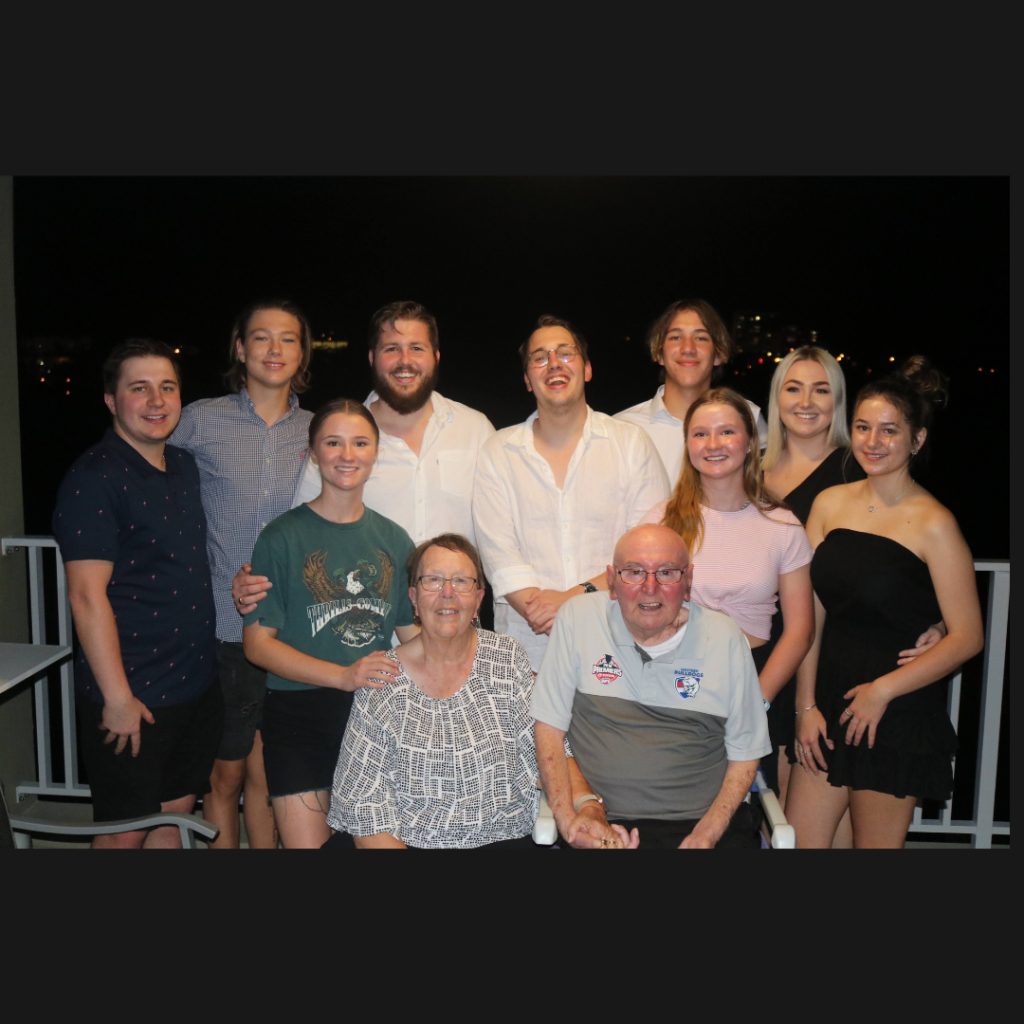
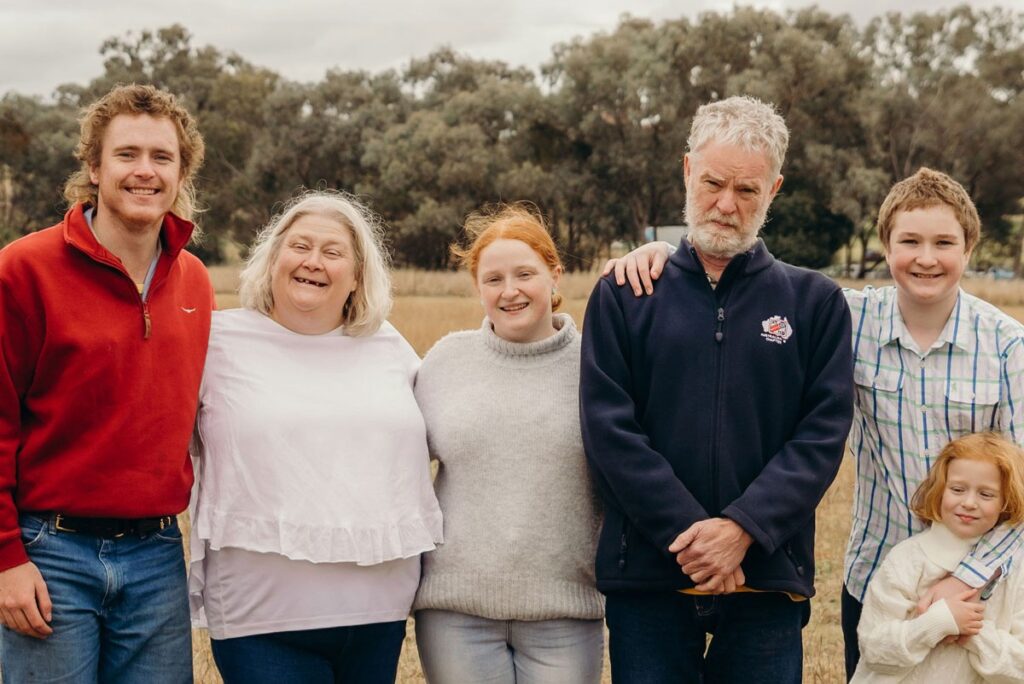
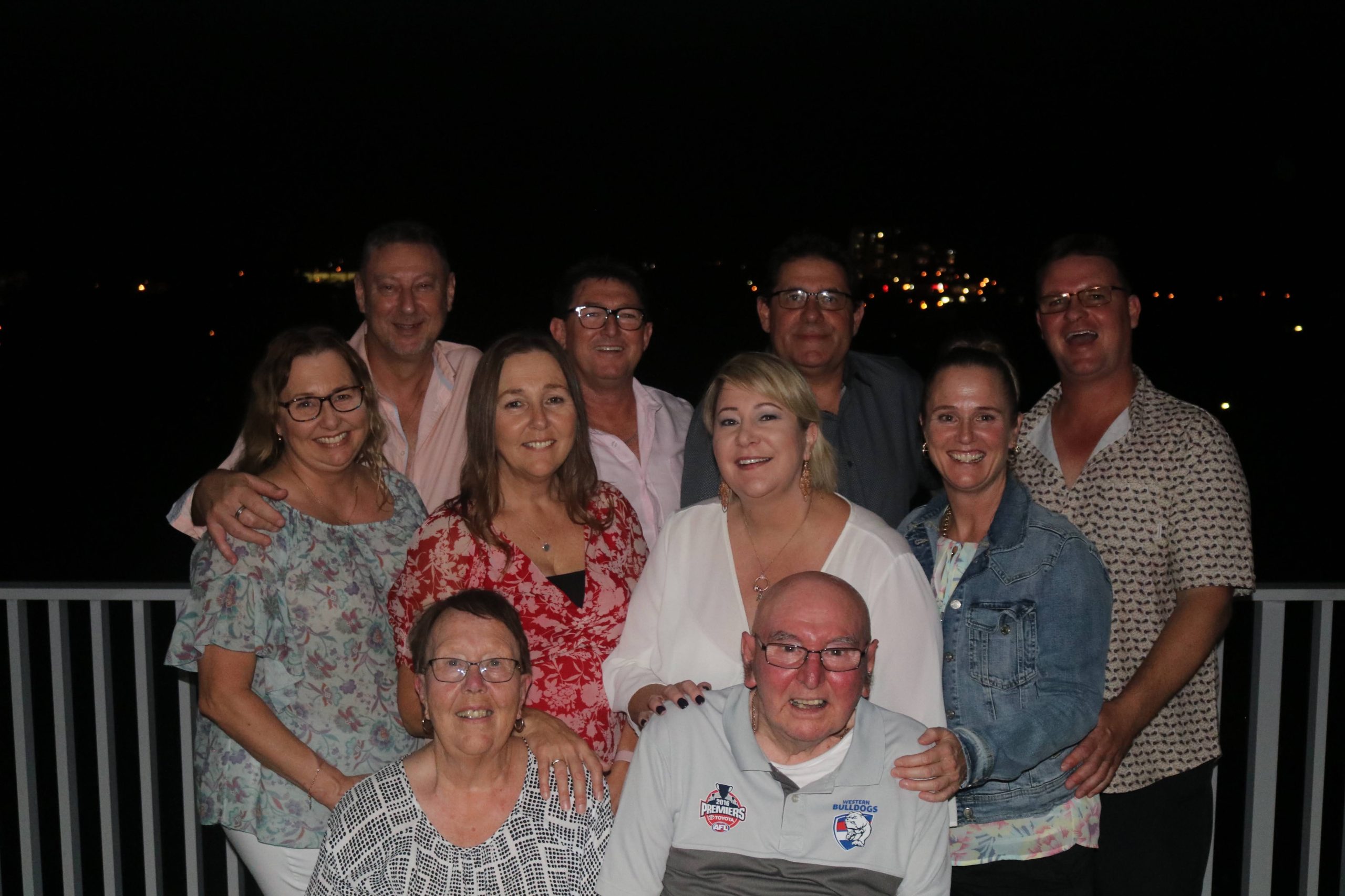
Sue and Ebbel Bierman with their daughters and sons-in-law (l to r) Cathy, David, Alison, Russell, Louise, Andrew, Joanne and Michael. 

With a heart full of passion, Ebbel Bierman lived and breathed footy, supporting both the Canberra Raiders and the Western Bulldogs. But no team, no game, could compare to the love he had for his family. His wife, Sue, and daughters Alison, Louise, Cathy, and Joanne were the heart of his world, the ones he adored beyond measure. 

As Cathy remembers, Ebbel was a man who saw the bigger picture. A man who understood the importance of research in the battle against motor neurone disease (MND). With unwavering conviction, he supported the fight for a cure, knowing that every breakthrough brought the world one step closer to the answers so many desperately needed. 

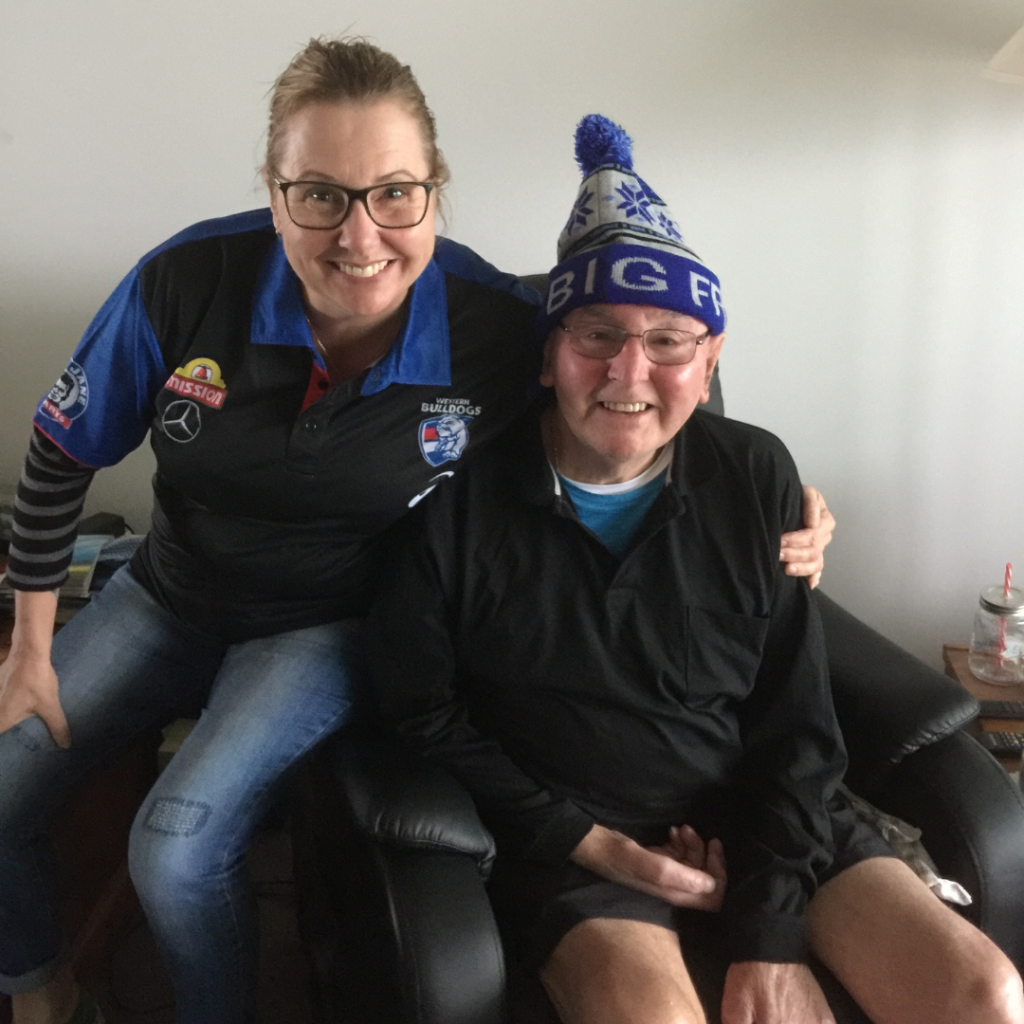
Cathy with her dad
Sue and Ebbel with their grandchildren

“Dad died in February 2023, 11 years after first being diagnosed with MND. Throughout that time he was really reflective on his diagnosis. He said, if I can do anything that can help other people, it might not help me, but it might help someone else. His participation in research was how he did that,” said Cathy.  

In 2016, Ebbel and Cathy participated in an important MND research study, led by Associate Professor Shyuan Ngo from the University of Queensland and the Royal Brisbane and Women’s Hospital. With the support of a Scott Sullivan MND Research Fellowship, the study aimed to better understand metabolic dysfunction in people living with MND/ALS. 

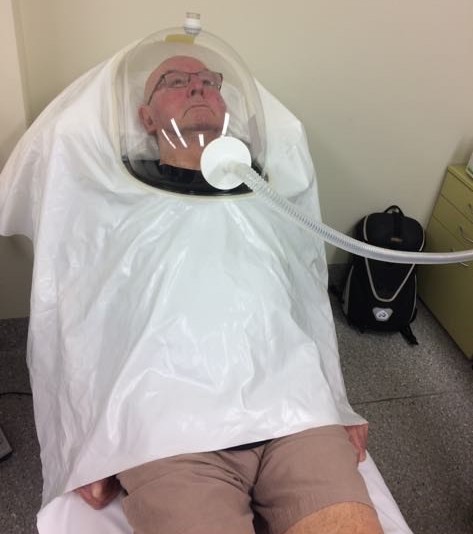
“They were hypothesizing that the increase in metabolism and loss of weight would increase the rapid decline in MND. So, for 12 months Dad would go in, put on his swimmers and swimming cap and sit in a pod and then lie down and do nothing – just be completely sedentary. While he laid there, they would track how much oxygen he breathed in and his metabolism,” explained Cathy. 

“I got the opportunity to do one of the pod sessions as a control because even though I was related to him, because I was female and didn’t have MND, they were able to use my session as a control. So, we were both involved in that which is pretty cool.” 

Ebbel’s pod session

Committed to learning all she could about MND and the research being done around Australia, Cathy would try to attend symposiums and talks, to expand her understanding. Today, she continues to advocate the important role research and knowledge plays in the fight against MND. 

“Research is gold. There is lots known about MND, but not so much about how we can stop it. You can help by having lots of knowledge. Knowledge is power.” 

FightMND invests more than $18 million into research in 2024 

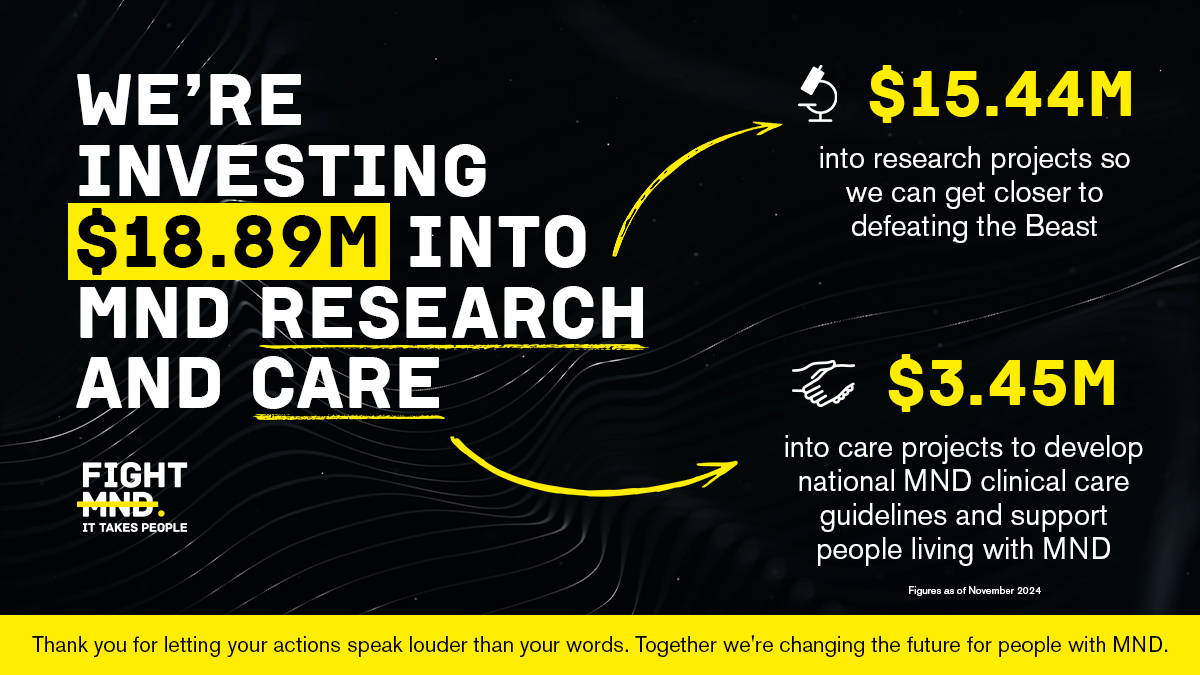
In 2024, FightMND is investing $18.89 million into MND research and care initiatives for people living with MND.  

Of this, we’re investing $15.44 million into MND Cure research, supporting 25 projects and five career development awards, including:  

  • 4 drug development projects to advance promising new drugs or therapies  
  • 7 discovery projects addressing key unknowns in MND research, particularly its causes and progression   
  • 11 Improving and Accelerating Translation (IMPACT) projects focusing on overcoming challenges in MND drug development and clinical trials  
  • 2 infrastructure projects to advance MND research infrastructure  
  • 1 Massey Charitable Trust grant   
  • 1 mid-career research fellowship to support mid-career researchers focusing on MND  
  • 4 early career research fellowships to support early career researchers focusing on MND.  

We’re investing a further $3.45 million into 10 MND Care support projects for Australians living with and affected by MND. 

Learn more about our investment in our 2024 Cure and Care Investment booklet.  

Join the fight against MND

At FightMND, our vision is a world without MND. Finding treatments, or a cure, for this insidious disease is only possible through careful, rigorous research. To properly tackle such as relentless disease, the progress can be slow, but the outcomes are progressing this fight. 

In just 10 years, we’ve made incredible progress, but we are not done yet. There is still much work ahead, and we need your help to continue this fight. A donation to FightMND will help us fuel the research that will lead to breakthroughs in treatment and, one day, a cure.

By donating, you’re providing hope to those Australians living with MND. Hope that one day we’ll defeat this Beast for good. 

Researching why MND impacts people in unique ways 

Researching why MND impacts people in unique ways

Motor neurone disease (MND) presents a unique puzzle for researchers, with its many forms and unknown causes creating significant challenges. These complexities can lead to roadblocks that slow down progress in drug development and clinical trials. However, IMProving and ACcelerating Translation (IMPACT) projects are working to break through these barriers and speed up the process of finding effective treatments. 

The goal of IMPACT projects is to address the obstacles in developing and testing drugs for MND by accelerating the translation of research into real-world therapies. This involves improving drug design, identifying the genes responsible for the disease, and gaining a deeper understanding of how MND manifests differently in individuals. IMPACT also focuses on creating more accurate lab models and developing diagnostic markers to enhance MND research and treatment. 

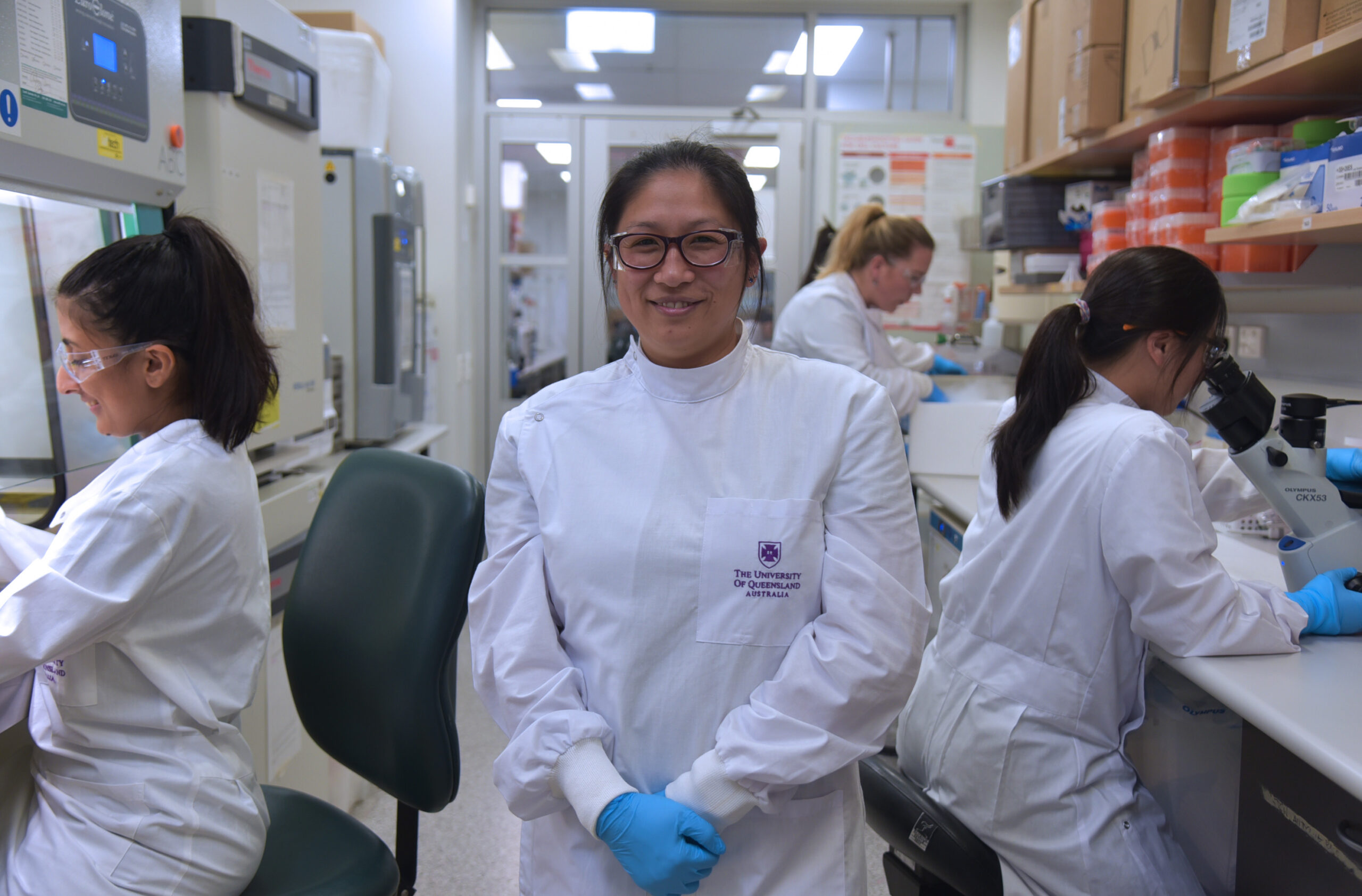
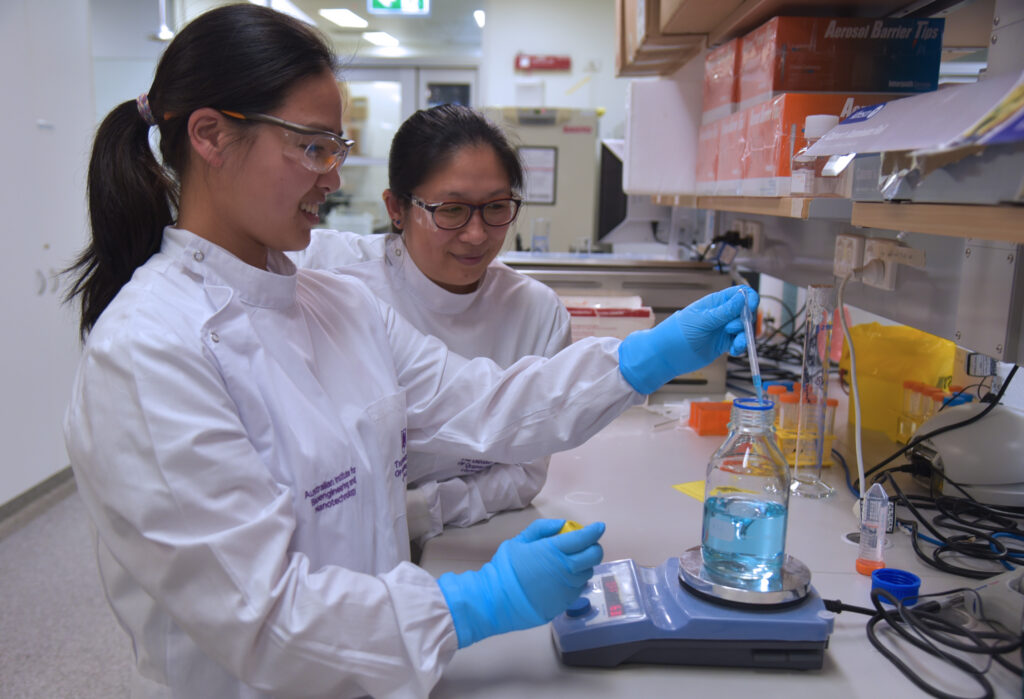
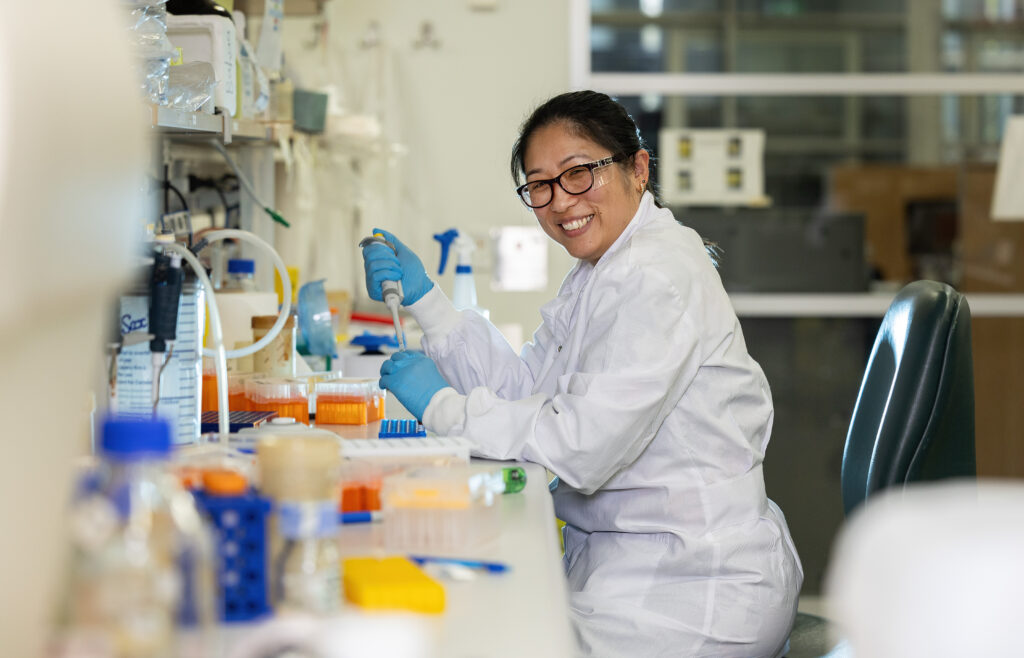
At the forefront of this groundbreaking research is Associate Professor Shyuan Ngo, a Group Leader at The University of Queensland’s Australian Institute for Bioengineering and Nanotechnology. With a strong track record in translational research, disease modelling, and biomarker development, Dr. Ngo is a leader in the MND field. 

In 2024, Associate Professor Ngo received two grants from FightMND totalling nearly $1.3 million. Once of these projects is an IMPACT project helping to understand why MND presents differently in people.  

Below Associate Professor Ngo tells FightMND more about her IMPACT project and why it is important for future research into MND.  

What is your project about? 

In MND/ALS, we don’t yet know what triggers the disease or how it progresses in the brain. This project will use brain samples from both ALS mice and people living with ALS, ALS-related dementia (ALS-FTD), or frontotemporal dementia (FTD) to create detailed gene maps. These maps will help us understand how changes in brain cells happen over time and contribute to the development of the disease. 

What do you hope to achieve with your project? 

Our goal is to compare the gene maps we create from brain tissue with those we’ve already made from spinal cord tissue. By combining these maps, we hope to identify key pathways that we can target—and the right time to target them—to prevent motor neurons from dying prematurely in ALS / MND. 

What is new about your project/trial? How has this new development come about?   

We have previously generated gene maps to study what drives the death of nerve cells in the spinal cord. But we still do not know whether this happens before or after the death of nerve cells in the brain.  

This project will generate the first combined gene maps of the brain and spine to help us understand the sequence of events that drive disease progression in ALS / MND. 

How does this project contribute to the Australian and international research community? 

As part of this project, we will create an interactive web tool that the Australian and international research community can use to explore our gene maps of the brain and spinal cord for their own interest and for the generation of new research questions.  

What is the significance of FightMND’s investment in helping you progress your project/trial to the next stage?  

FightMND’s investment into this project is important because the information that we generate from this project will help us to then identify what we need to target, and when we need to target them to prevent to nerve cells from dying.   

In your opinion, why is it important for Australians to continue to donate to FightMND?   

Continued donations to FightMND allows them to support important research that will help us to find ways to halt or cure the disease. 

Creating hope through investing in research 

A/Prof. Shyuan Ngo. FightMND grant announcement The University of Queensland on Tuesday, November 12, 2024.

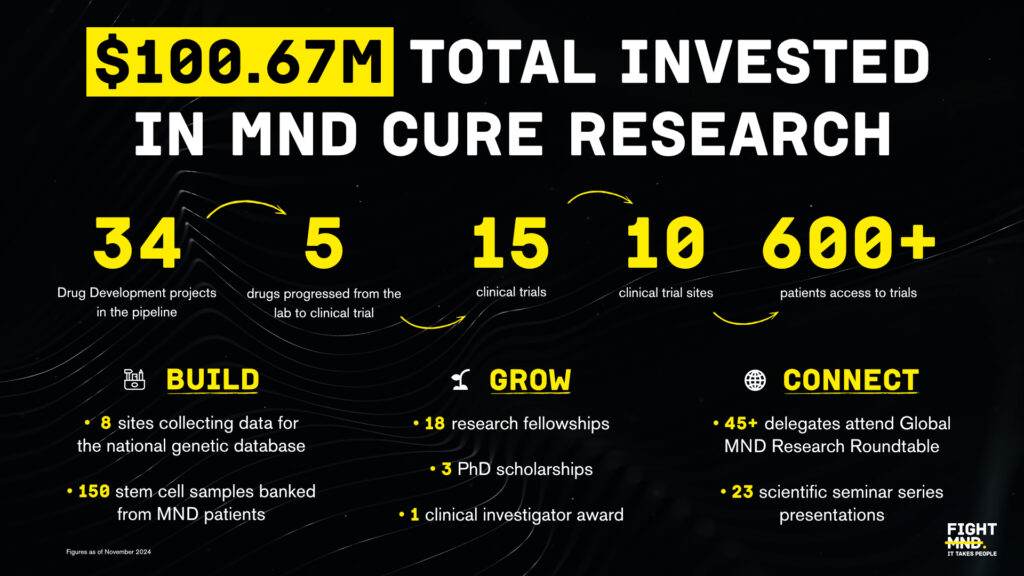
Associate Professor Ngo’s research is just one of 25 Cure research projects receiving funding in 2024. This funding takes FightMND’s total investment into Cure research to $100.67 million since 2014

Funding this research is important to increase our chances of a breakthrough, but it is a lengthy and costly process.  

FightMND’s commitment to finding a cure is built on four key pillars: 

  • Funding world class research: We invest in top-tier research through a rigorous and competitive grants program aligning with the National Health and Medical Research Council (NHMRC) grants process.   
  • Capacity building: We enhance the capacity and capability of the MND research workforce through scholarships and fellowships.  
  • Infrastructure: We make targeted investments in critical infrastructure that supports MND research in Australia.  
  • Knowledge exchange: We facilitate the sharing of knowledge across the national and international MND community.  

These investments ensure that MND research in Australia remains competitive and world-leading, driving us closer to better treatments and a cure for MND. You can learn more about our investment in research on our Cure investment page.  

Curious to see the impact of your support in 2024? Check out our 2024 Cure and Care Investment Booklet to learn more about the cutting-edge projects we’re backing this year. 

Together, we can defeat the Beast that is MND.

A Friend’s Place: helping families navigate the heartache of MND 

A Friend’s Place: helping families navigate the heartache of MND 

A motor neurone disease (MND) diagnosis sends shockwaves through every corner of a person’s life. It doesn’t just affect the person receiving the news. It creates a ripple that spreads out, touching everyone who loves them. For families, the impact can be especially overwhelming. Trying to make sense of a loved one’s diagnosis, whilst also supporting children through the emotional turmoil, is an incredibly difficult challenge. 

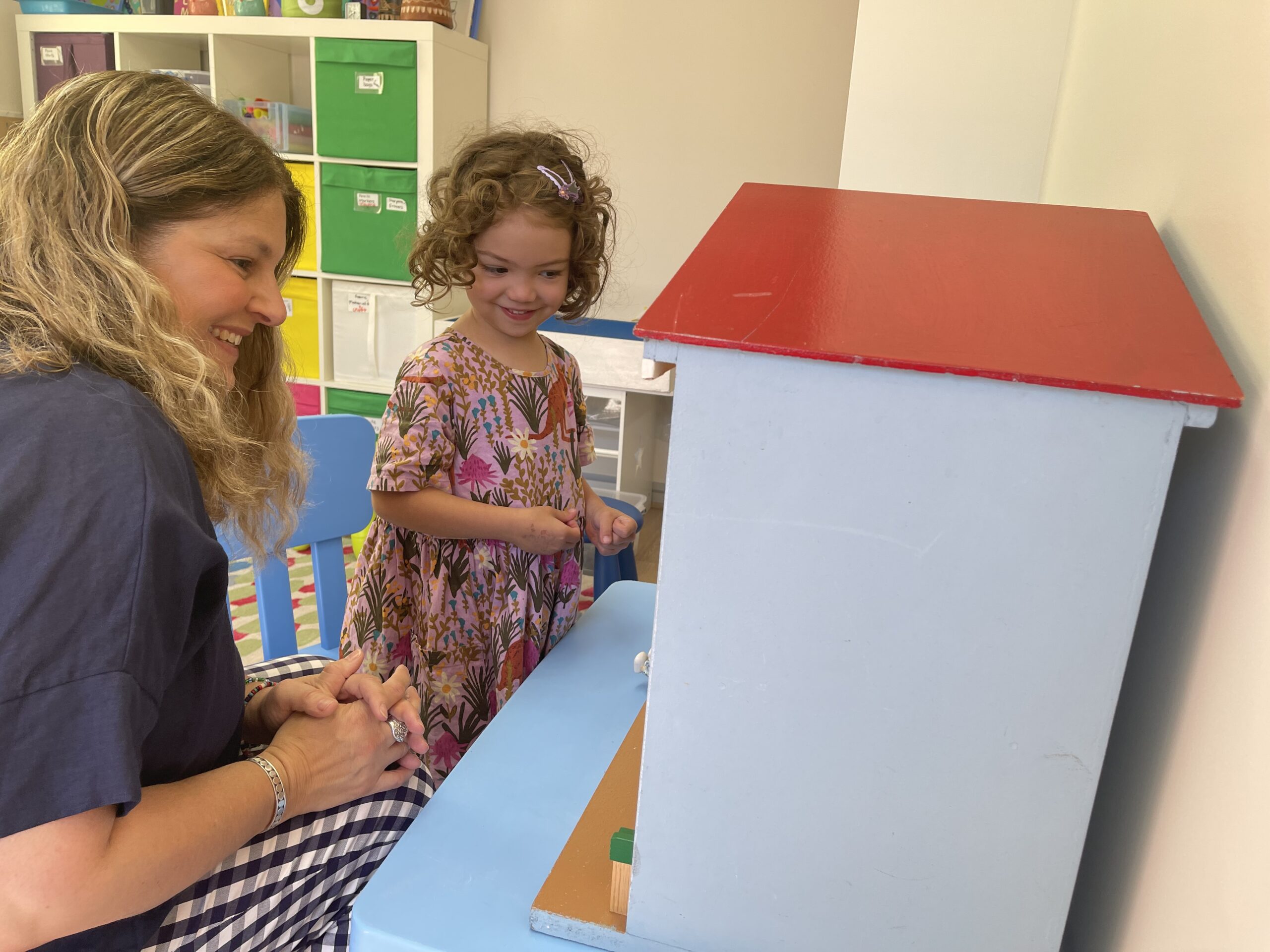
A Friend’s Place is a Care initiative that received FightMND funding in 2024. The program is a collaboration between the National Centre for Childhood Grief (NCCG) and Australia’s MND associations. It offers specialist care packages designed specifically for families with children aged 3 to 17, helping them navigate the emotional complexities of living with a close family member who has MND. 

FightMND’s support of this program is a continuation of its contribution to the initiative’s 2023 pilot program. The 2024 investment will see the program expanded to 35 families across Australia. These families will receive individual counselling sessions and group family counselling sessions, either in-person or online. Support for the children’s schools and other important care resources are also included in the program. 

For Chris Waugh, Head of Development at NCCG, the program supports families impacted by MND to understand and cope with grief and loss. 

“Families where a loved one has been diagnosed with a terminal illness, like MND, face a lot of challenges. Their loved one is still alive, but they know they have a terminal condition. There is no hope for recovery,” said Chris. 

“For children, they need to hear the truth in an age-appropriate way and have a choice to be involved in what is happening. The NCCG’s specialist staff will help both children and adults to develop their coping skills and other personal strengths to build long-term resilience. This resilience, in turn, helps children and adults to minimise future mental health challenges, stay connected with their education and community and lead their own best lives,” he said. 

This year’s investment includes providing targeted training for frontline care staff from each Australian MND association. This training will enhance their ability to support families through their grief and bereavement. It will ensure families receive the guidance and resources they need during this challenging time. 

Andrew and Susan’s story 

Andrew was a family man who loved spending time holidaying with his wife, Susan, and children John, Joy, Thomas and Lucy. His life changed when he received the devastating diagnosis. He had MND.  

Andrew and Susan knew it was important to include the kids in their discussions about what his diagnosis meant. To let them ask questions and prepare them for the journey ahead.  

Shortly after receiving his diagnosis, Andrew and Susan were connected with the NCCG for specialist care. From the start, the family were provided with the support they needed, with grief counselling offered to the whole family.  

Andrew was only 58 when he died in 2023 , leaving behind his wife Susan and four kids. From left to right: John, Susan, Joy, Andrew, Thomas and Lucy.

For Andrew’s eldest daughter, Joy, writing letters to her dad helped her navigate her grief. They helped her work through her feelings and what was happening to her and her family. While these letters were never sent, they were read at Andrew’s funeral as a powerful eulogy to her dad.  

Accessing A Friend’s Place gave Andrew, Susan and their family the ability to have meaningful conversations with one another. Conversations reflecting on the past. Conversations about what was happening. Conversations about what laid ahead. This helped them build resilience and navigate their grief together. 

Investing in Care initiatives to support those affected by MND 

A Friends Place is just one of 10 Care initiatives receiving funding from FightMND in 2024. 

Thanks to your generosity, we can invest in vital programs and initiatives delivered by Australia’s MND associations and other organisations working with those battling the Beast. This investment ensures that these groups can continue to help those living with MND and their families.  

Our investment into Care initiatives focuses on three key priorities that we developed in consultation with the MND community.  

  • Evidence: funding care-focused research to inform best practices for supporting people with MND, their carers and families.  
  • Standards: Investing in the creation of national standards and guidelines for MND care.  
  • Support: Providing targeting support through organisations delivering MND care and services. 

Our Care impact page provides more information about FightMND’s investment in this area. You can also learn more about the amazing initiatives were supporting this year in our 2024 Cure and Care Investment Booklet

Help us make a difference for those living with MND

At FightMND, we know that while the search for a cure continues, the daily reality of MND impacts the lives of many Australians. That’s why we’re investing in research and initiatives aimed at improving the care and support available to those affected by MND, their families, and their caregivers.

Our focus on care-centered research is designed to complement the work of MND associations and other organisations across Australia that are committed to improving the quality of life for people living with MND.

But this is a fight we cannot win alone. Your support helps us to:

  • Fund vital care-focused research that shapes the best MND care practices
  • Improve the accessibility, consistency, and overall quality of care for MND patients
  • Increase national awareness of MND and its impact on families

With your help, we can continue to drive progress toward defeating the Beast of MND.

Using zebrafish to understand more about MND

Using zebrafish to understand more about MND

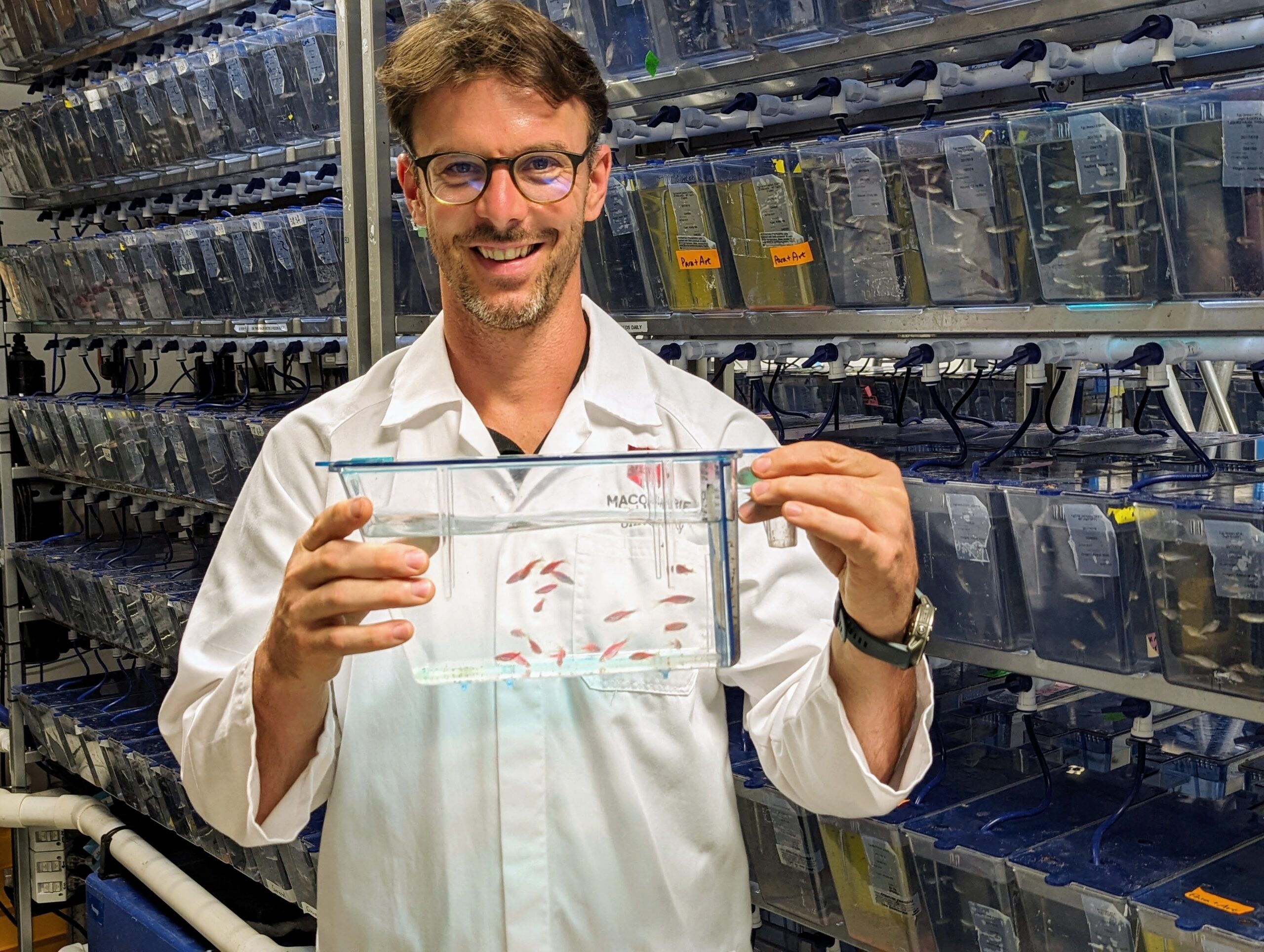
Assoc. Prof Marco Morsch. FightMND grant announcement Macquarie University Sydney on Monday, November 11, 2024.

There is a wide range of projects that FightMND supports through grant funding. These include projects: 

  • building our understanding of MND 
  • addressing roadblocks to treatment 
  • helping to progress the development of treatments. 

One project type invested in by FightMND is Discovery projects. These projects aim to understand why motor neurone disease (MND) occurs and what drives its progression. They advance our understanding of MND. Increasing the chances of developing effective treatments or a cure. 

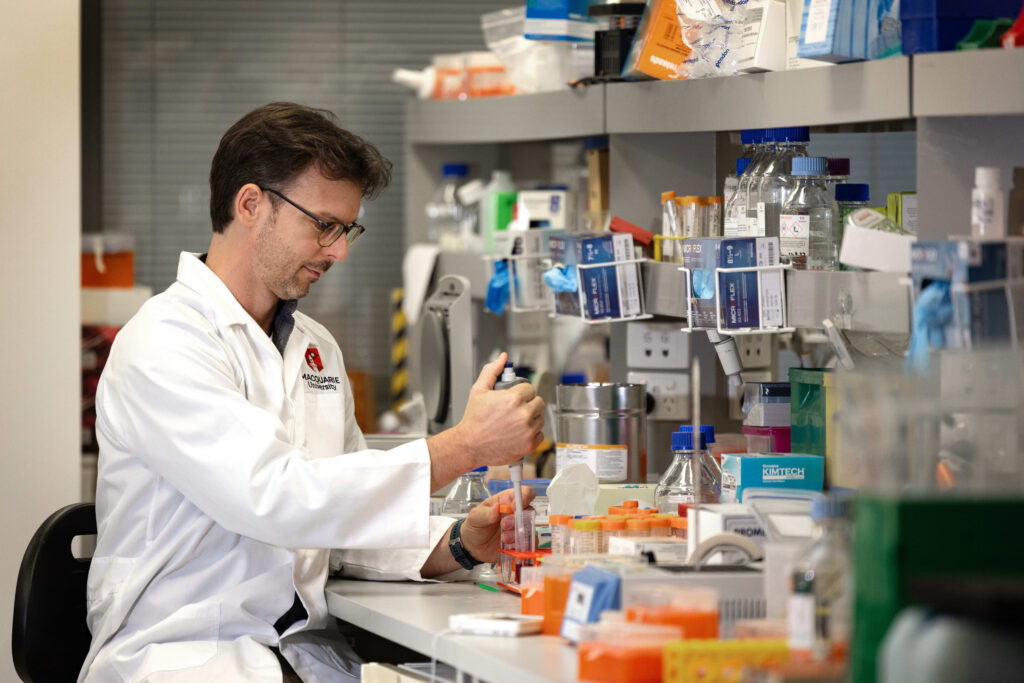
Associate Professor Marco Morsch is Co-Director of Research at the Macquarie Medical School at Macquarie University. He founded one of Australia’s first zebrafish research programs into MND This program investigates how neurodegenerative diseases, like MND, develop. Through his research, Associate Professor Morsch is helping to uncover critical insights into neurological disorders.  

In 2024, Associate Professor Morsch received a FightMND Discovery Grant to support his research on a protein called TDP-43.  

In this interview, he shares what inspired him to focus on MND research and talks about his journey so far. 

What made you decide to pursue a career in MND research? 

My motivation to pursue research in MND stems from the need for more knowledge and treatments for this devastating condition. The more I learn about the complexity of MND and the challenges in finding effective therapies, the more driven I became to contribute to this field.  

I am passionate about uncovering mechanisms that lead to neurodegeneration, particularly in MND, and finding ways to halt or reverse its progression. Knowing that each discovery, even at the basic science level, could bring us one step closer to relief for patients and families inspires me and my team to get into the lab every day. 

Can you tell us a bit about your research to date? 

Before receiving the 2024 funding, my research focused on understanding how protein clumping happens and how nerve cells interact with supporting cells, called glial cells. I studied how proteins like tau and TDP-43 become toxic when they clump inside neurons and how this affects nearby support cells.  

Using models like zebrafish, I examined what happens when these proteins are overproduced in nerve or glial cells. This research has helped me understand how protein clumping leads to neurodegeneration.  

What is your current project about? 

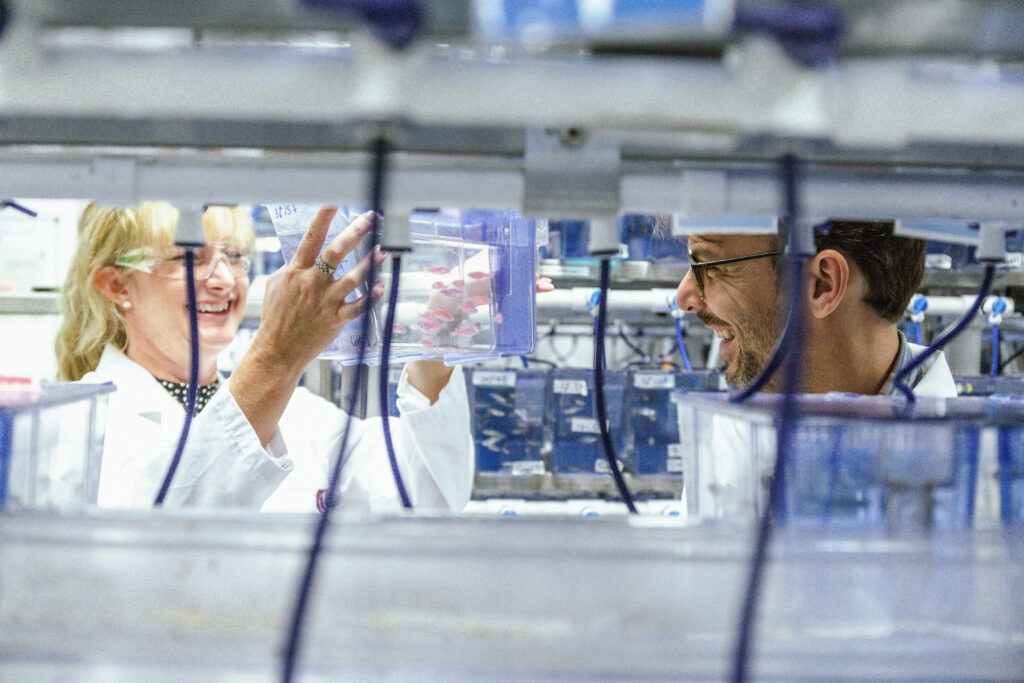
This project looks at how the TDP-43 protein is kept stable and functional in cells. Zebrafish will be used to provide a see-through view of this protein in action.  

TDP-43 is important for normal cell activity, but when it misfolds and forms clumps, it contributes to diseases like ALS / MND. By understanding how TDP-43 stays in its proper shape, we hope to find ways to stop it from clumping, which could lead to new treatments for ALS / MND and similar diseases. 

What do you hope to achieve with your project? 

Our goal is to find specific molecules that can help keep the TDP-43 protein in its healthy, functional state. By doing so, we hope to prevent or even reverse the toxic clumping of TDP-43. This could lead to new ways to protect nerve cells and slow or stop disease progression. 

How does your project contribute to the MND research community? 

Our project will provide new understanding of how TDP-43 clumps together, revealing potential targets for treatment that could help advance ALS / MND research worldwide. 

How does a FightMND grant help your project? 

This Discovery grant allows us to build on my earlier research findings and focus on early strategies to stop harmful protein clumping before it causes damage.  

It also allows me to explore multiple models in more detail, speeding up the search for potential treatments for ALS/MND. 

Why is it important for Australians to continue to donate to FightMND? 

Investment into MND research is crucial for translating findings from basic research into potential therapies. This, in turn, significantly advances our progress toward clinical applications.  

Donations are vital to support the groundbreaking research happening in Australia and all over the world. This funding is helping accelerate research with the ultimate goal of finding effective treatments and one day a cure for MND.  

Investing in research to beat the Beast 

The road to a cure for MND is long and challenging, but it’s one we’re travelling together — step by step, breakthrough by breakthrough. The only way forward is through relentless, world-class research. But that research takes time, dedication, and, most importantly, investment.  

For a decade, we’ve stood united in the fight against MND, determined to defeat the Beast. Thanks to the incredible generosity of our supporters, Australia has emerged as a global hub for MND research. The country’s scientists are not just contributing to the fight — they’re leading it, and their work is making waves worldwide. 

In 2024, FightMND is investing a further $18.89 million into groundbreaking research and vital care initiatives. This investment brings our total funding to a staggering $115.78 million

The projects we’re supporting this year build on the remarkable progress we’ve made so far, with one clear goal: to improve the lives of those living with MND and bring us closer to a cure.  

Want to see how your support is making a difference? Dive into our 2024 Cure and Care Investment Booklet to discover the incredible projects we’re backing in 2024. 

Together we can beat the Beast that is MND.  

Researching gene therapy to improve motor neuron health

Researching gene therapy to improve motor neuron health

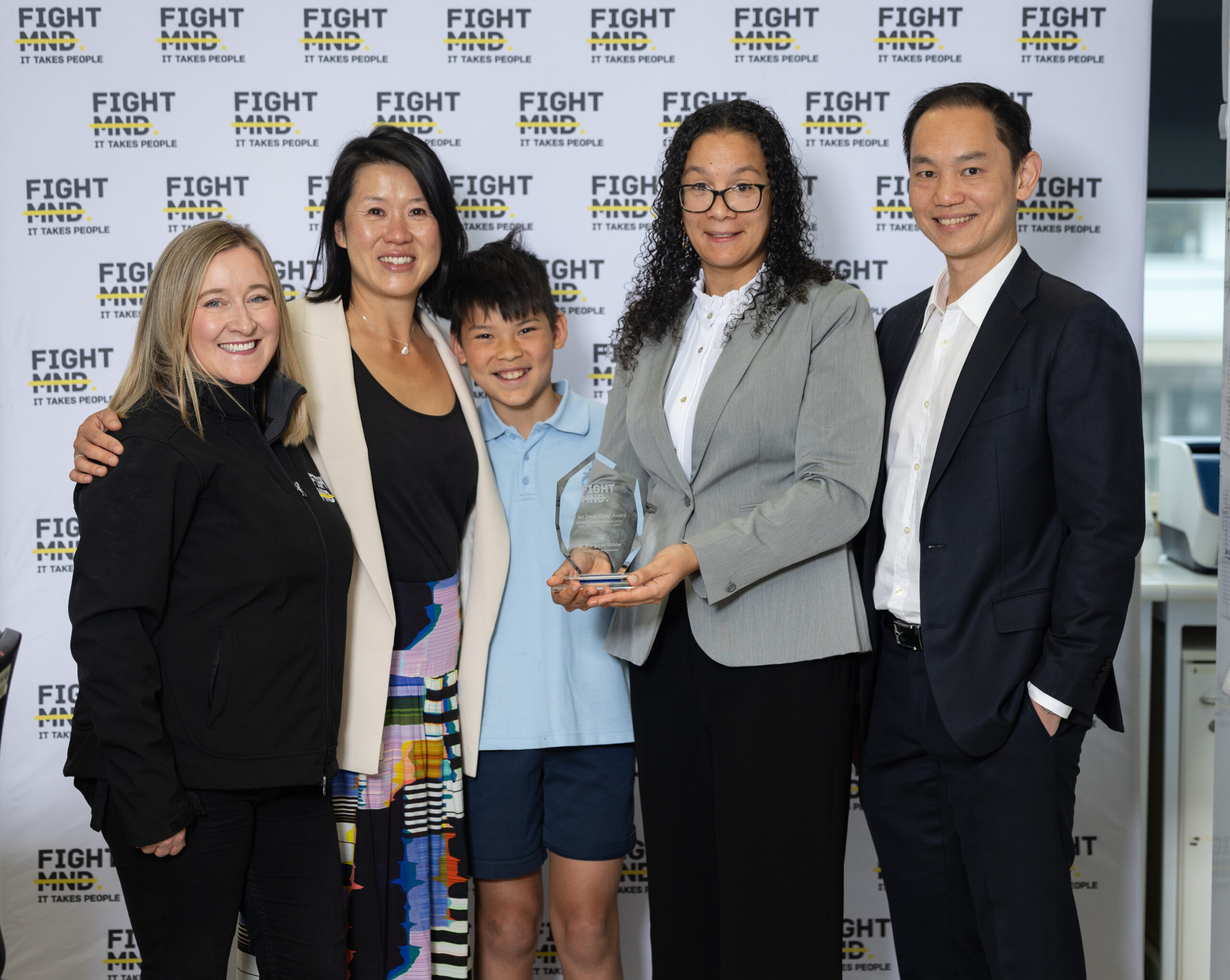
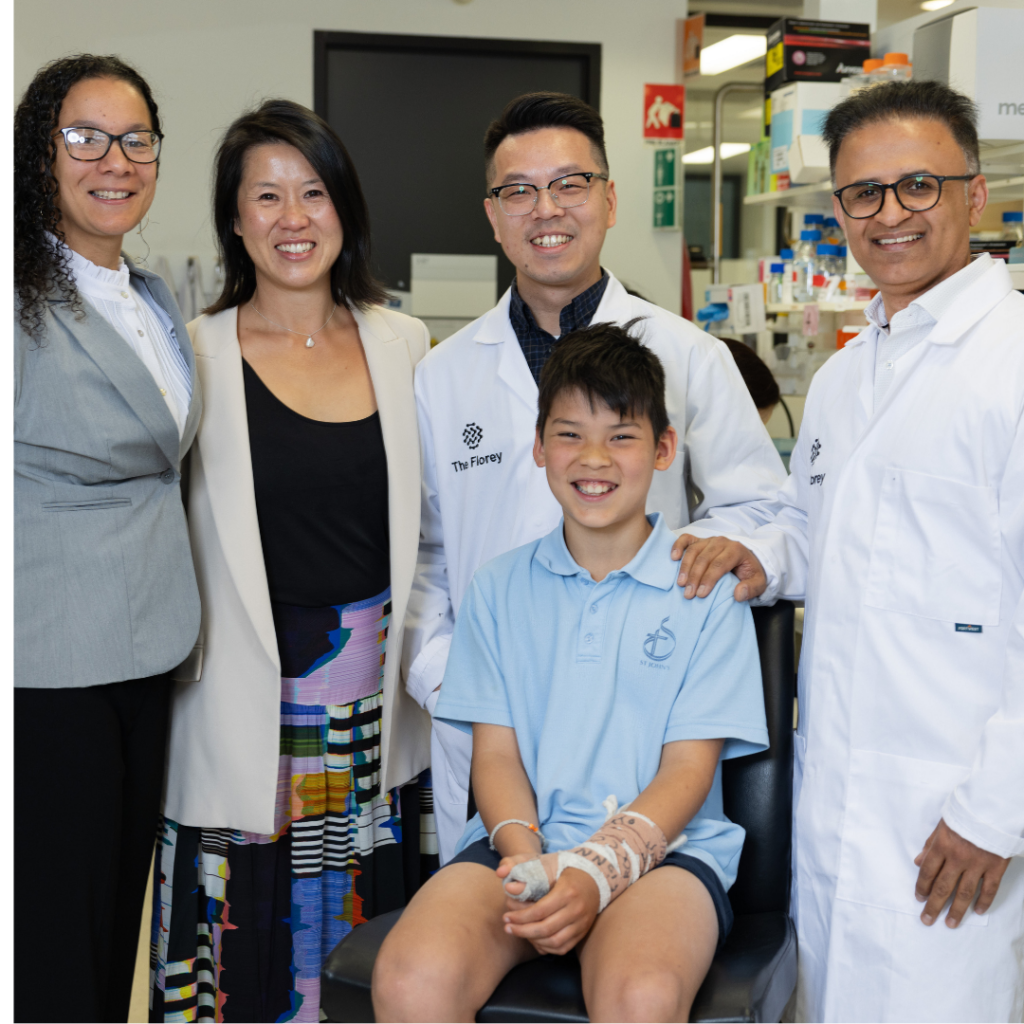
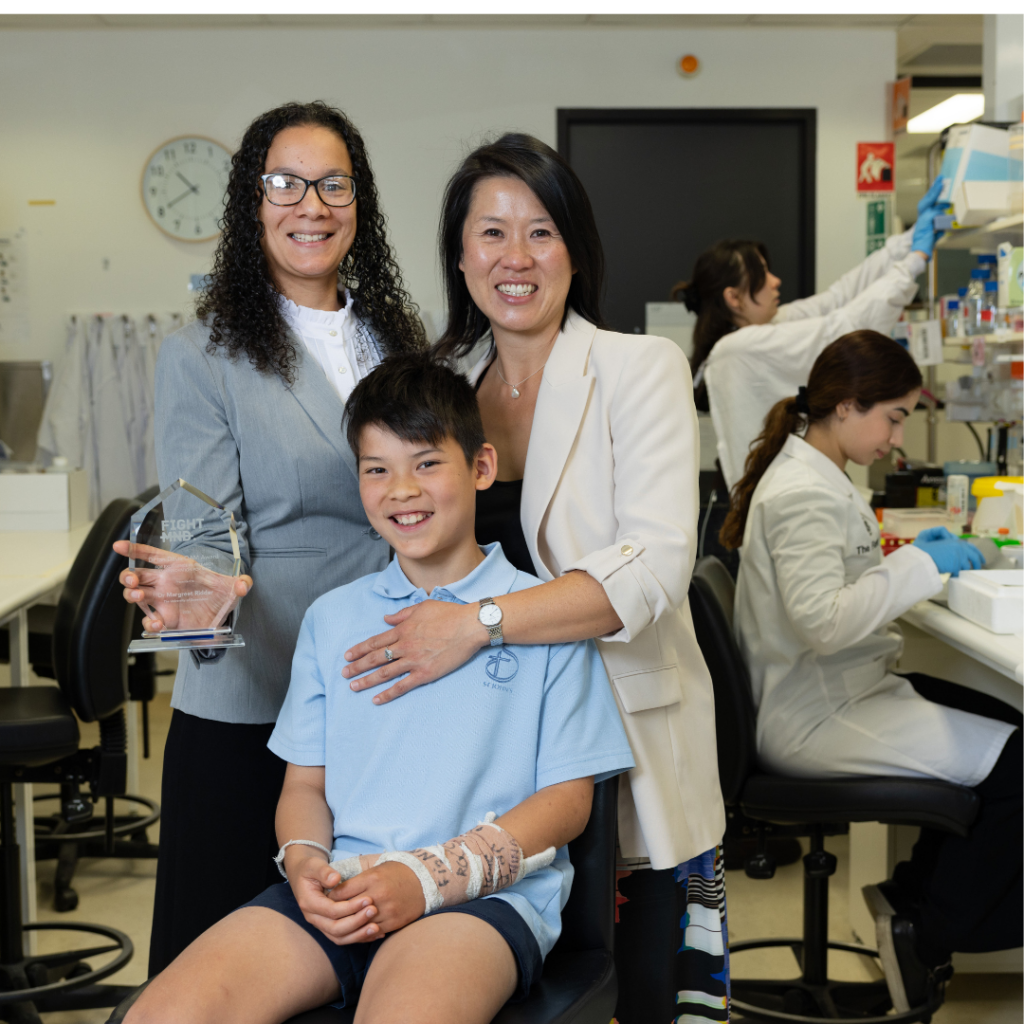
Dr Bec Sheean, Mel Yang, Archie Davis, Dr Margreet Ridder and Assoc Prof Trevor Chong. FightMND grant announcement and presentation of the first Dr Ian Davis OAM Award Florey Institute Melbourne on Friday, November 8, 2024.

To beat the Beast, researchers need to understand the causes and progression of motor neurone disease (MND). Understand the challenges in drug development and clinical trials. Understand how to target disease-causing genes.  

Dr. Margreet Ridder is a recipient of a 2024 Improving and Accelerating Translation (IMPACT) grant. Based at the Queensland Brain Institute at the University of Queensland, she is leading research titled Targeting Motor Neurone Hyperexcitability with Drug-Controlled Gene Therapy. This project aims to determine whether a gene therapy that slows motor neurone activity can improve their health. Potentially preventing MND. 

Dr. Ridder is the first recipient of the Dr. Ian Davis OAM Award. Named after FightMND Co-founder, Dr Ian Davis, the Award recognises and honours research excellence. It is presented to the highest-ranked project in the grant round.  

Here Dr. Ridder discusses her research and highlights the vital role of grants for MND research. 

What is your project about? 

Neurones are excitable cells. They use electrical signals to communicate with each other and the muscles in our body. Too much excitability, known as hyperexcitability, can cause neurones to die. This project aims to rescue motor neurones from hyperexcitability using gene therapy.  

What do you hope to achieve with your project? 

Ultimately, the goal of this project is to provide a gene therapy option for patients with sporadic MND. Sporadic MND is a diagnosis given to cases with no apparent family history of the disease.  

One of the first steps to bring a new gene therapy to patients is to show its safety and effectiveness in preclinical models. This research looks at this. 

What is new about your project? 

Researchers, including myself, have used a wide range of tools to control neurone excitability to determine their function in specific behaviours. We have adapted this technology as a therapeutic intervention to reduce motor neurone hyperexcitability in MND.  

How does your project contribute to the MND research community? 

Gene therapy has recently emerged as a strategy for treating MND. Specifically in cases where there is a family history of the disease. This research aims to provide a gene therapy avenue to treat all forms of MND.  

How does a FightMND grant help your project? 

This IMPACT grant makes this research possible! This project has been paused previously due to a lack of funding.  

Suspending research, or even worse, abandoning it, is a common reality for many researchers. 

What is different about your project compared to existing research? 

Medications reducing hyperexcitability, such as rilozole, focus on reducing the excitation of neurones. This research focuses on increasing inhibition instead. To achieve our goal, we have engineered a human silencing receptor as part of this work.  

Why is it important for Australians to continue to donate to FightMND? 

One of the devastating things about MND is that time is not on your side when you are diagnosed. Without sufficient funding for research, there is a real risk that promising research projects will be put on the shelf, or worse, stopped.  

We need an army of researchers that are sufficiently funded if we want to speed up research discoveries. 

Advancing research: FightMND’s 2024 grant round 

In 2024, FightMND is investing $18.89 million into research and care initiatives for people living with MND.  

As we mark 10 years of FightMND, this year’s funding brings our total investment into MND research to an incredible $115.78 million!  

This year’s projects continue to build on the incredible work done in the MND research space to date. Each one aims to improve the lives of those living with MND and their families. Want to know more? Check out our 2024 Cure and Care Investment booklet for more information about the incredible projects receiving funding in 2024. 

FightMND to invest $18.89M in the fight against MND in 2024

FightMND to invest $18.89M in the fight against MND in 2024

FightMND is investing a further $18.89 million into motor neurone disease (MND) research and care initiatives.  

Founded in 2014 by Neale Daniher AO, Dr. Ian Davis OAM and Pat Cunningham, FightMND was established to raise awareness and vital funds for MND research. Over the past decade, it has grown into one of the world’s largest independent funders of MND research. 

As we mark 10 years of FightMND, this year’s funding brings the total investment into MND research to an incredible $115.78 million

This year’s projects continue to build on the incredible work done in the MND research space so far. Each one aims to improve the lives of people living with MND and their families. Our 2024 Cure and Care Investment booklet has more information about all the projects receiving funding this year.  

Cure investment 

We’re committing more than $15.44 million of this year’s investment to MND Cure research. This funding will support 25 projects, and five career development awards. Selected through our competitive grant round, these projects include: 

  • 4 drug development projects to advance promising new drugs or therapies 
  • 7 discovery projects addressing key unknowns in MND research, particularly its causes and progression  
  • 11 Improving and Accelerating Translation (IMPACT) projects focusing on overcoming challenges in MND drug development and clinical trials 
  • 2 infrastructure projects to advance MND research infrastructure 
  • 1 Massey Charitable Trust grant  
  • 1 mid-career research fellowship to support mid-career researchers focusing on MND 
  • 4 early career research fellowships to support early career researchers focusing on MND. 

Since 2014, we’ve invested more than $100.67 million into Cure projects. This investment has transformed Australia’s MND research landscape. Today, Australia stands as a central hub for MND research, with our dedicated researchers playing a crucial role in the global effort. We now understand some of the genetic mutations and biological events that may cause MND. Moreover, Australians living with MND have more opportunities to participate in research and clinical trials than ever before. 

Care investment 

In addition to our support of Cure research, we also work to support Australia’s MND community through our investment in Care initiatives. In 2024, we’re investing $3.45 million into 10 MND Care support projects for Australian’s living with and affected by MND.  

Our investment into Care initiatives started in 2017, with Care research investment starting in 2022. Since then, more than $15.11 million has been invested into this area.  

This investment focuses on three key priorities, which were developed in consultation with Australia’s MND community.  

  • Evidence: funding care-focused research to inform the best practices for supporting people with MND, their carers and families. 
  • Standards: investing in the creation of national standards and guidelines for MND care.  
  • Support: providing targeted support through organisations delivering MND care and services.  

It is important to note that FightMND is not a care service provider. This is the role of MND Australia, the state MND associations, MND&Me and other organisations serving the MND community. Our investment works to complement the existing work of these groups and Australia’s front line MND Care providers.  

This investment aims to improve the lives of Australians living with MND, their families and the people caring for them.  

It takes people. Thank you!  

FightMND would like to acknowledge the contribution of the Federal and Victorian Governments, and our major partners Coles, Bunnings, the AFL, Seven Network, Herald Sun and Chemist Warehouse.  

But our biggest thanks goes to you! Our amazing donors, Beanie buyers, community fundraisers and volunteers. Your generosity ensures we can invest in research and care initiatives for those living with MND and their families. This investment brings us closer to finding effective treatments, and one day a cure for this insidious disease.  

In the coming weeks we’ll be sharing with you some of the projects to receive funding during the 2024 grant round. Stay tuned!  

Neale Daniher named 2025 Australian of the Year for Victoria 

Neale Daniher named 2025 Australian of the Year for Victoria 

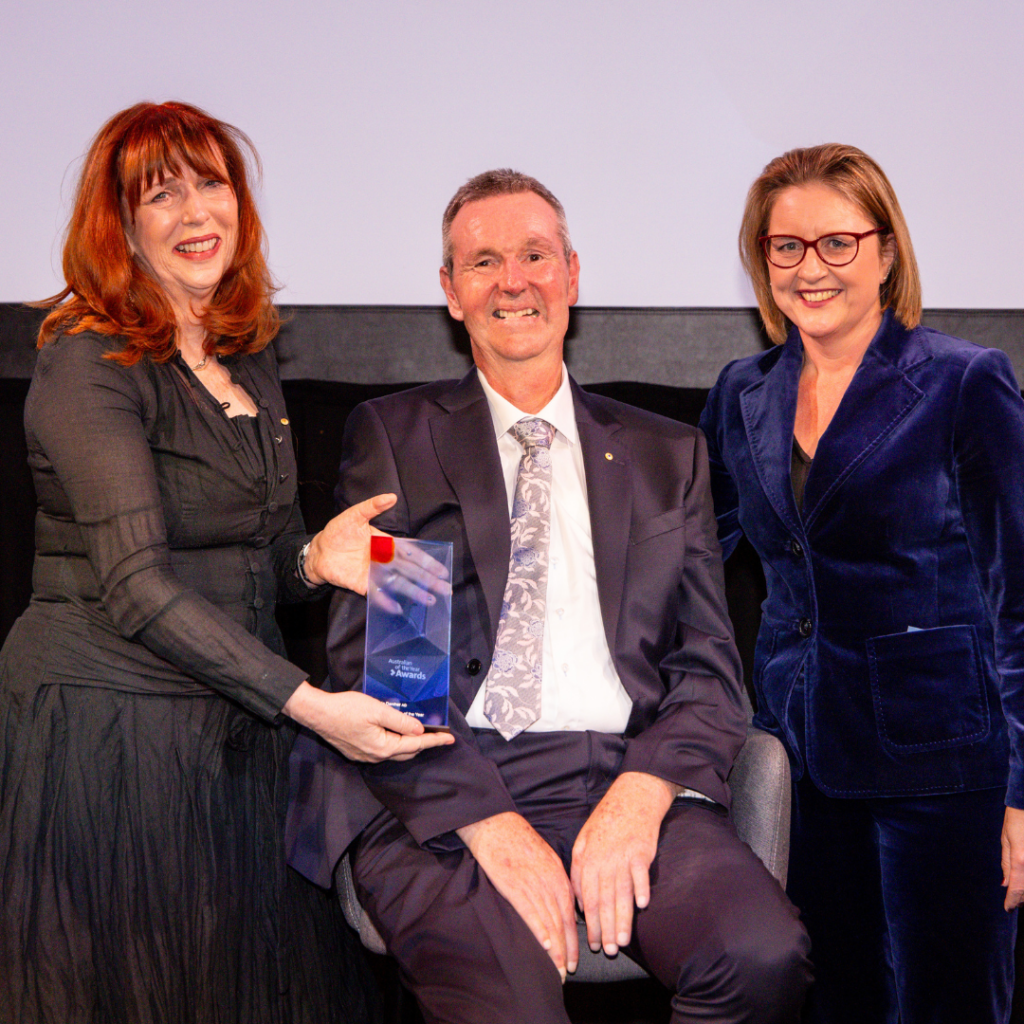
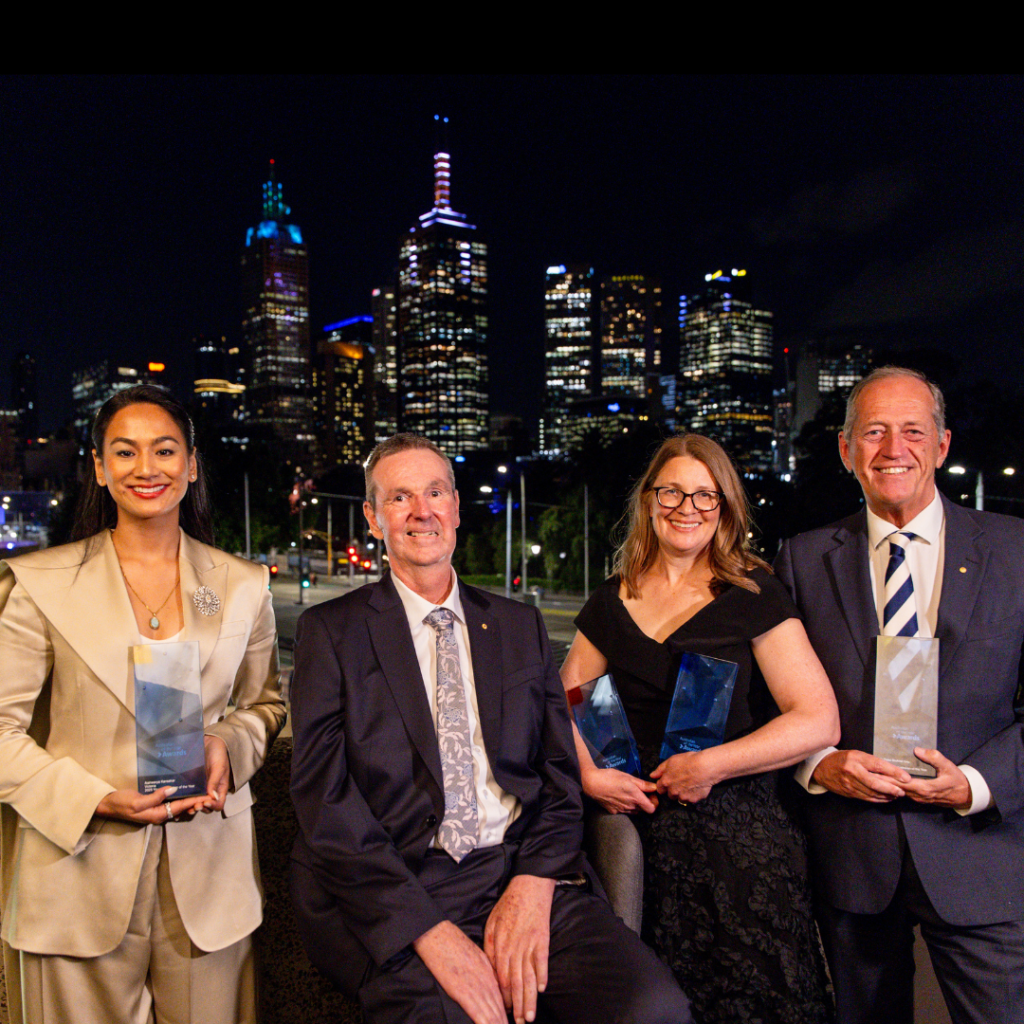
FightMND Co-founder and Patron, Neale Daniher AO, has been named the 2025 Australian of the Year for Victoria. Announced during a ceremony at the Victorian Arts Centre on November 8, Neale was recognised for his advocacy to find a cure for motor neurone disease (MND).  

Diagnosed with MND in 2013, Neale, in partnership with the late Dr Ian Davis OAM and Pat Cunningham, whose wife Angie sadly died from MND in 2016, established FightMND in 2014 to raise vital funds and awareness for MND research. Today, FightMND has grown into one of the world’s leading independent funders of MND research with more than $97 million invested in research and care initiatives to date.  

Upon receiving this honour, Neale said:  

“While it is not the reason we do what we do, on behalf of my wonderful family I am humbled and honoured to be named as Victoria’s Australian of the Year. 

As a tight knit family, together we have taken on motor neurone disease, and I am so appreciative of the emotional strength of my steadfast wife Jan and children Lauren, Luke, Bec and Ben and their partners. Their enduring guidance, and unwavering support has allowed me to maintain my battle against ‘the Beast’.  

My nomination is also a nomination for everyone who has been impacted by this insidious disease and allows us to appreciate that this fight is not yet over and continue our focus on the search for a cure.  

It is a privilege to be recognised amongst this group of amazing and inspirational Victorians whose talents and efforts were identified as our state’s nominations for 2025, and I congratulate my fellow nominees Madeleine Buchner OAM, Professor Deborah Cheetham Fraillon AO and Wayne Holdsworth on their achievements and will look to watch on as their efforts continue to unfold. 

I am grateful to the awards committee, but this is more than an individual recognition and I thank and acknowledge each and every person amongst our community, my tireless and hardworking colleagues at FightMND, friends and family who have all been with me on this journey.  

It is with pride and gratitude that I will be representing our state, and all those living with or impacted by MND, at the National awards next year. Play on.” 

FightMND CEO, Matt Tilley congratulated Neale on this incredible honour. 

“This is more than a wonderful recognition of Neale’s unwavering passion and leadership, this is also a moment that should bring a smile to the face of everyone who’s bought a beanie, taken on an ice bucket challenge, donated, or contributed to the fight against the Beast.  

It also touches the many families living with MND and recognises the power of one is always the strength of many.” 

The FightMND team would like to congratulate Neale on this recognition of his amazing work.  

Stay tuned for Australian of the Year 

Neale will join the other state and territory Australians of the Year for the national awards announcement on 25 January 2025 in Canberra.  

To learn more about the Australian of the Year Awards and the state and territory winners for 2025, visit https://australianoftheyear.org.au/

Daniher’s Drive raises over $2M for FightMND 

Daniher’s Drive raises over $2M for FightMND 

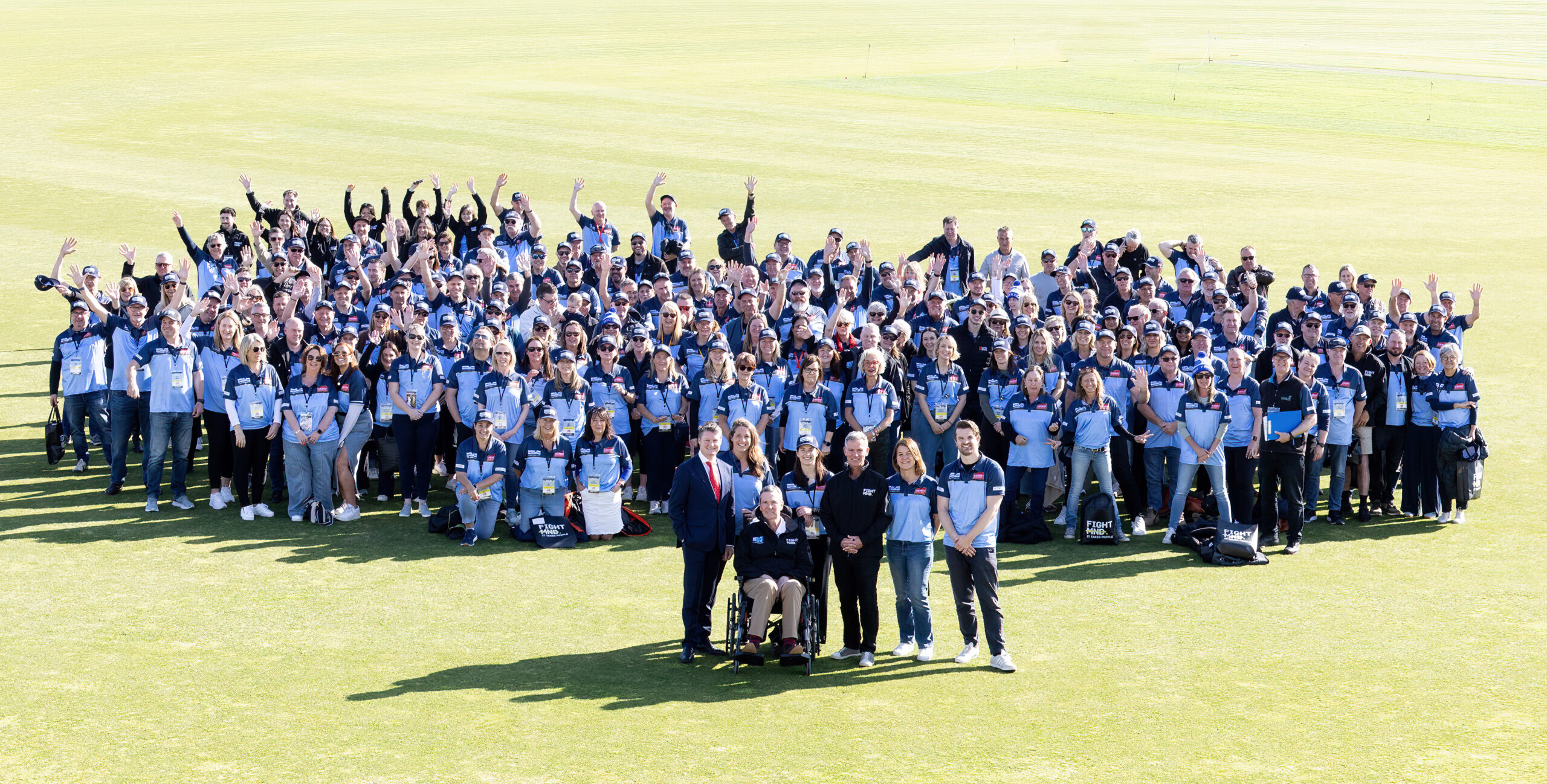
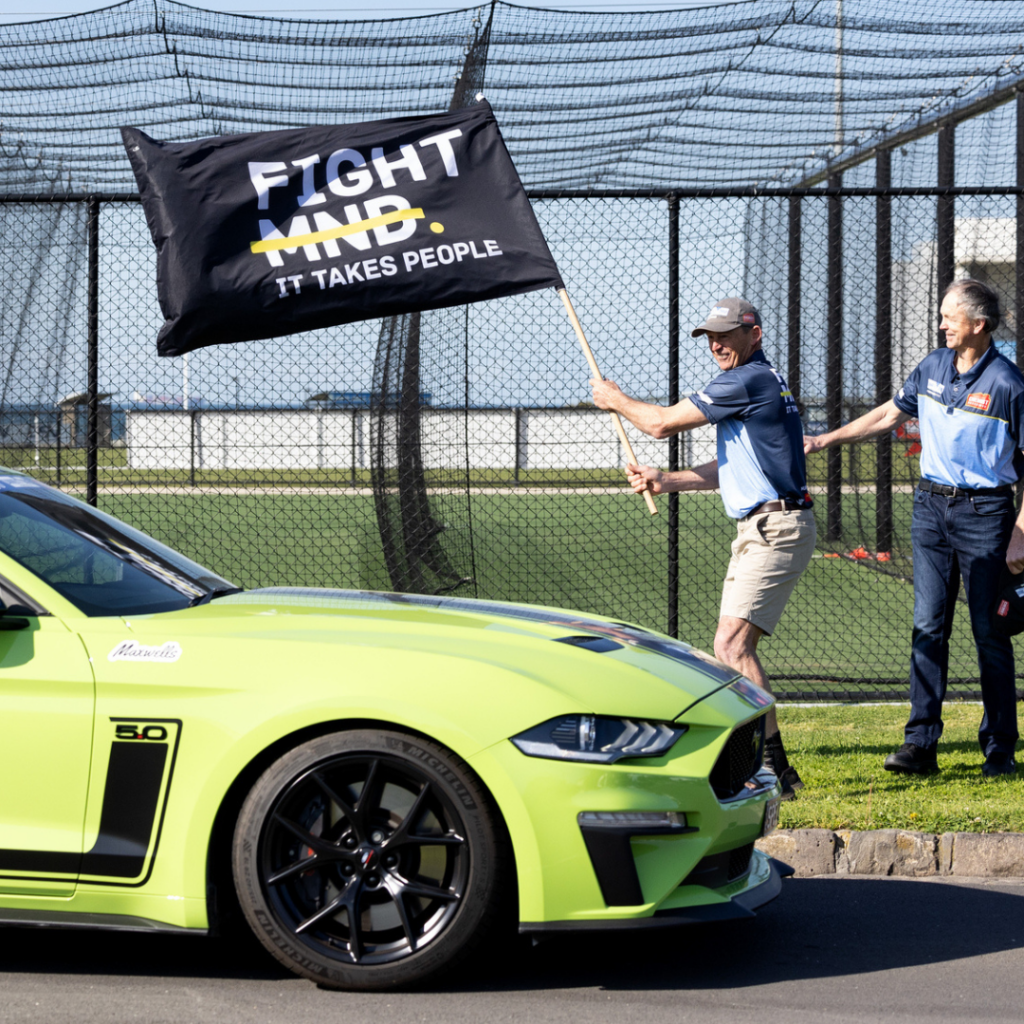
Start of the 8th Daniher’s Drive Wiiliamstown Oval on Thursday, October 10, 2024.

The chequered flag is down! Our incredible Drive teams have crossed the finish line for Daniher’s Drive 2024, and what a journey it has been! 

This year Daniher’s Drive raised more than $2 million for vital motor neurone disease (MND) cure research and care initiatives. This phenomenal achievement is thanks to the tireless efforts of our Drive teams, the generosity of the Australian community and the unwavering support of our fantastic Drive partners.  

Thanks to our Drive partners, including gold partner, Chemist Warehouse, silver partner PSC Insurance, raffle partner Jayco and night event partners CMV Truck and Bus and Bayside Coaches. Thanks also to our supporters Coles Express / Reddy Express, The Card Network and Hertz.  

The biggest thanks must go to our Drive teams. A big part of Daniher’s Drive is connection, and our Drive participants are family. Each have their own reason to take part in the Drive, with many having a personal connection to MND. We are continuously blown away by their fundraising efforts each year. To everyone who participated in the Drive, thank you.  

The funds raised through the Drive will be invested into MND research and care initiatives. Stay tuned for the announcement of our 2024 grant recipients later this year to learn more about the impactful projects and initiatives receiving support. 

While the Drive may be over for another year, you can still show your support during October, thanks to our incredible partner, Chemist Warehouse. Simply visit any participating Chemist Warehouse store, excluding Western Australia, and donate at the register. Be quick! The campaign finishes on 30 October 2024.  

Together we can drive towards a world without MND. 

Terry and Chris Daniher wave the flag to start the Drive. Wiiliamstown Oval on Thursday, October 10, 2024.
Chris Daniher Ice Bucket Challenge. Avoca Community event Daniher’s Drive on Friday, October 11, 2024.
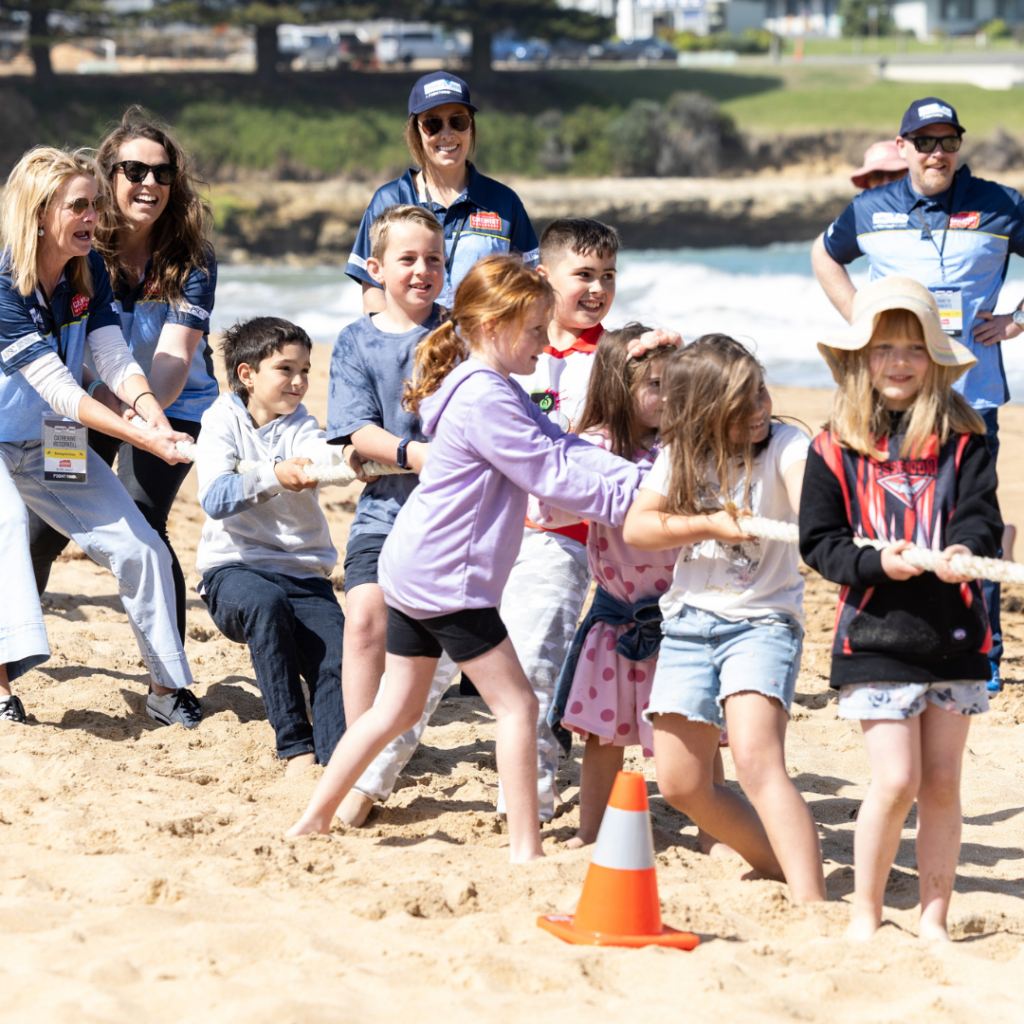
Port Campbell Surf Life Saving Club. Daniher’s Drive on Saturday, October 12, 2024.

Congratulations to our Jayco Raffle winner! 

Congratulations to Tahlia Heath who walked away with this year’s major prize a 2024 Jayco Starcraft Bushpack 19.61-3 Caravan valued at $65,590. With its very own FightMND decals and colours, your brand-new caravan is going to turn heads wherever it goes. 

Congratulations also to Cathy Fryer who walked away with a $4,999 gift voucher from The Card Network.  

Join the Drive in ’25: expressions of interest now open 

Daniher’s Drive isn’t just an event. It’s a celebration of people and connection. Whether you’ve been touched by MND or want to make a difference, Daniher’s Drive is your chance to meet likeminded people and share unforgettable moments. 

Expressions of interest are now open for Daniher’s Drive 2025. Don’t miss out on this unique opportunity to connect, raise funds and awareness for MND research and care initiatives and have a great time while doing it! Register your interest today and be part of something truly special.  

What are you waiting for? Register your interest today! 

Michelle’s legacy: a future free of MND 

Michelle’s legacy: a future free of MND 

Michelle has chosen to remember her beautiful son Robbie with a gift in her Will to FightMND

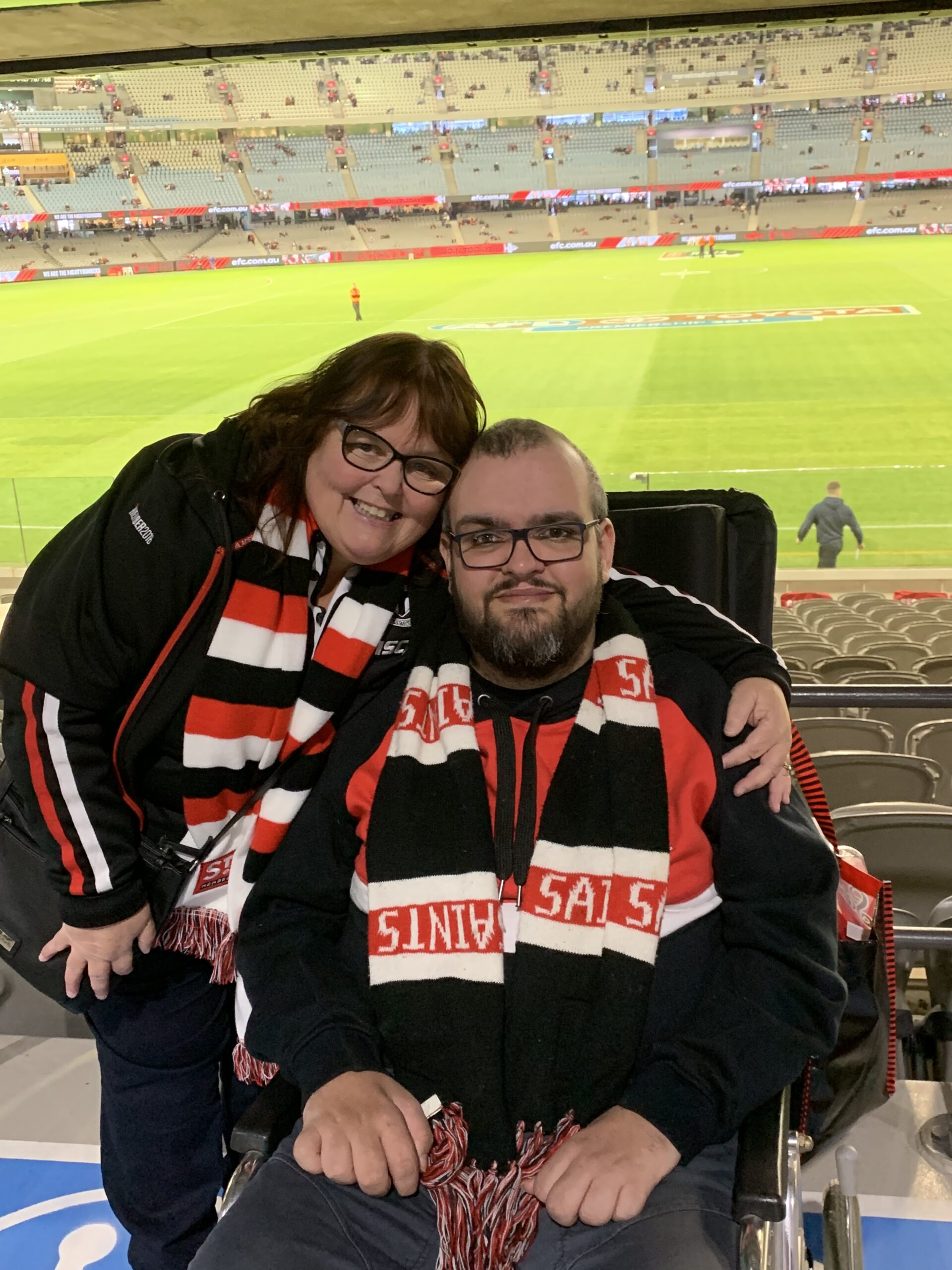
Robbie Caliste was a remarkable and vibrant young man. He cherished his work at the MCG, enjoyed living in a share house with friends, and was an avid supporter of both the St Kilda Saints and Melbourne Victory. However, his world was shaken to its core when he received devastating news at just 34 years old: Robbie was diagnosed with motor neurone disease (MND)

Faced with this monumental challenge, Robbie exhibited extraordinary courage. His family, led by his parents John and Michelle, rallied around him, creating the “Caliste Bubble” and providing round-the-clock love and care. The Caliste family navigated sleepless nights, physical hardships, and the heart-breaking progression of Robbie’s MND. 

After a brave battle against the “Beast”, Robbie passed away peacefully at home, aged just 36. His story echoes the experiences of many others affected by MND, highlighting the pressing need for advanced research, improved treatments, and ultimately, a cure. 

To honour Robbie, Michelle has generously chosen to include a gift to FightMND in her Will, driven by the hope that other families might be spared the anguish her family endured.  

“We made a promise that we would try and help find a cure for those who have to live with MND like our son Robbie.” 

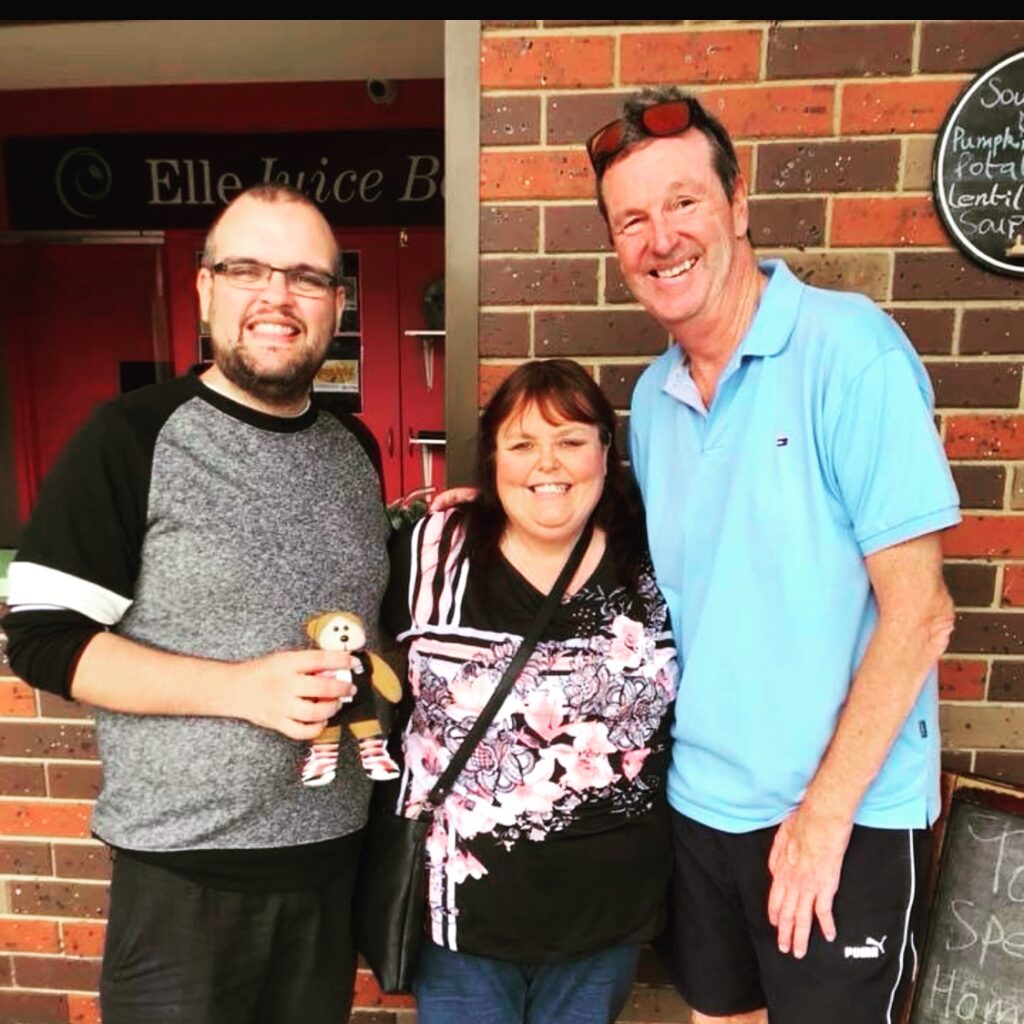
Michelle and Robbie Caliste with Neale Daniher in 2017.

By including FightMND in your Will, you can join Michelle by investing in a future where MND no longer devastates lives. While significant progress has been made, the journey towards a cure requires substantial time and resources. Your legacy could be a brighter future for all those impacted by MND, helping to fund world-leading cure research and care initiatives.

We would be delighted to answer any questions you might have about including a gift in your Will to FightMND. For a confidential discussion, please email Eloise Shepherd at [email protected] or call us on 1800 344 486 and ask for our gifts in Wills team.   

Together, we can invest in world leading MND cure research and care initiatives. Together, we can ensure a brighter future for all those affected by this devastating condition.  

Together we can beat the Beast and strive towards a future free of MND.